
Published July 8, 2026 · Educational information — not legal, tax, lending, or financial advice.
Part of the Business Funding Center.
Quick answer
There’s no single number. What credit a lender wants to see depends heavily on the type of funding: SBA loans and traditional bank products generally expect stronger personal credit, while some equipment financing, working-capital, and alternative options lean more on revenue and cash flow than on the score itself. On top of that, lenders weigh time in business, revenue, existing debt, industry, and collateral — so your score is one input in a bigger picture, not a pass/fail gate.
The useful reframe: instead of chasing a magic number, understand what each funding type typically prioritizes and where your business genuinely stands. A business with a modest owner’s score but steady revenue has real options; a strong score with thin, erratic cash flow may have fewer than expected. This article maps the landscape so you can prepare for the path that fits you.
Why lenders review credit at all
Before the numbers, the reasoning — because it explains everything that follows. When a lender extends funding, it’s handing over money today in exchange for a promise of repayment over time. Credit history is the most efficient evidence it has about how that promise has been kept in the past. A credit report and score summarize years of behavior into something a lender can read quickly: has this borrower paid as agreed, how much are they already carrying, and how have they handled obligations under pressure?
That’s why credit shows up in nearly every funding conversation — not as a judgment of you as a person, but as a risk signal. And it’s why the same score can mean different things in different contexts: a lender offering an unsecured line of credit is taking on more risk than one financing a specific piece of equipment it could reclaim, so the two read your credit through different lenses. Understanding that credit is fundamentally about risk, not worthiness, makes the rest of the picture click into place. (For the broader map of how funding works, start with what is business funding.)
Personal credit vs. business credit
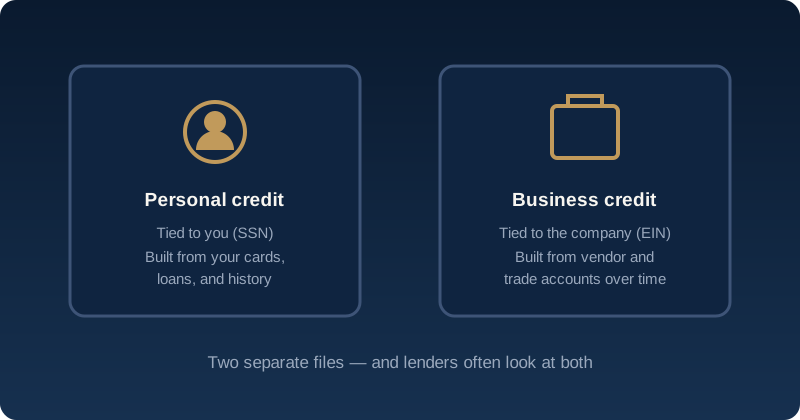
Here’s a distinction that trips up many owners: you don’t have one credit identity, you have two. Personal credit is tied to you as an individual, through your Social Security number, and it’s built from your own cards, loans, and payment history — the same file a mortgage or auto lender pulls. Business credit is tied to your company, usually through an Employer Identification Number (EIN), and it’s built separately, from the business’s own vendor accounts, trade lines, and borrowing history over time.
Which one matters more depends on where your business is in its life. A newer or smaller business often hasn’t had time to build much of a business credit file, so lenders lean heavily on the owner’s personal credit to gauge risk. As a company matures and establishes its own track record, business credit can carry more of the weight. But there’s a thread that runs through both: many small-business funding products involve a personal guarantee — the owner personally promising repayment if the business can’t — which keeps personal credit relevant even for established businesses.
The practical takeaway is that for most owners seeking funding, personal credit is worth understanding and preparing first, while business credit is worth building deliberately for the long run. The factors that shape the personal number are laid out in what makes up your credit score, and the difference between the report and the score in credit report vs. credit score.
What different funding types expect
This is where “it depends” becomes something you can actually use. Different funding products carry different risk for the lender, and that risk shapes how much the credit score matters.
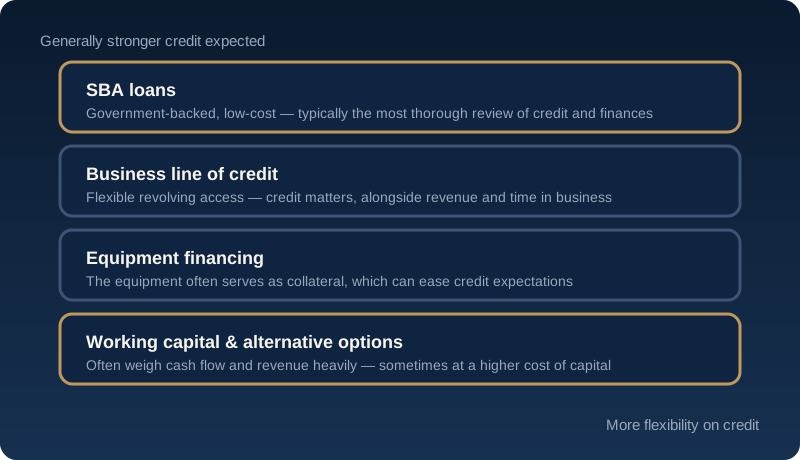
SBA loans — partially guaranteed by the U.S. Small Business Administration — are among the lowest-cost funding available, and the review reflects that: lenders tend to look thoroughly at personal credit alongside a healthy business financial picture. There’s no single published minimum, and each lender layers its own standards on top of SBA guidelines, so “strong credit helps” is more accurate than any specific number — the full picture is in SBA loan requirements explained. Business lines of credit — flexible, revolving access to funds you draw as needed — weigh credit meaningfully but read it alongside revenue and time in business; the trade-offs against a lump-sum loan are unpacked in business line of credit vs. term loan.
Equipment financing often expects less on credit than unsecured options, because the equipment itself typically serves as collateral — if the loan isn’t repaid, the lender has the asset to fall back on, which lowers its risk and can widen the range of credit profiles it will consider. Working capital and alternative funding — a broad category including revenue-based products — frequently place heavy weight on cash flow and consistent revenue, sometimes accommodating weaker credit in exchange for a higher cost of capital. The pattern across all of them: the more secured or revenue-backed the funding, the more flexibility there tends to be on the score.
The factors beyond your score
If you take one idea from this article, make it this: the score opens the conversation, but it rarely finishes it. Lenders read a whole business, and the other inputs often carry as much weight. Time in business — how long you’ve been operating — signals stability; many lenders have minimums. Revenue — how much the business brings in — sets the ceiling on what it can responsibly repay. Cash flow — the timing of money in versus money out — may matter most of all, because a profitable business with erratic cash flow can still struggle to make fixed payments. Existing debt tells the lender how much room is left, industry shapes perceived risk, and collateral can reduce it.
The consequence cuts both ways, just as it does with a mortgage. A strong personal score can’t rescue a business with thin or unpredictable revenue. And a modest score paired with steady revenue, healthy cash flow, and time in business is a genuinely workable file — especially for funding types built to emphasize those things. This is why preparation isn’t only about credit; it’s about having the whole picture ready, which is the subject of how to prepare your business before applying for funding.
Practical preparation
Start where you have the most control and the clearest view: your personal credit. Pull your reports from all three bureaus and read them for accuracy — lenders may look at any of them, and an error on one file can shape how you’re seen; credit monitoring keeps that picture current between reads (the how-to is in how to read your credit report). If something’s wrong, dispute it early, since the dispute process takes time and is free. Then work the levers that respond: keep credit card balances low relative to limits (utilization matters here as much as anywhere), pay everything on time, and avoid opening new personal credit in the run-up to applying.
Alongside personal credit, get the business picture in order: separate business and personal finances cleanly, keep organized records of revenue and cash flow, and know your numbers before a lender asks. If you’re playing a longer game, begin building the business’s own credit deliberately — a topic worth its own attention. And before any of the applying starts, a simple first step is understanding what options might fit a business like yours at all: a free Business Funding Snapshot is designed as an educational overview, not an application or approval. The broader countdown — documents, statements, common weak spots — lives in the preparation guide.
Common misconceptions
“There’s a magic number that guarantees funding.” There isn’t — no score guarantees approval, because credit is only part of what’s reviewed, and any lender promising guaranteed approval regardless of your situation is a warning sign, not an opportunity. “Business funding only looks at business credit.” For most small businesses, personal credit is central, particularly where a personal guarantee is involved. “My personal and business credit are the same thing.” They’re separate files built from separate activity — and keeping the finances behind them separate is itself good practice.
“If my score isn’t perfect, I shouldn’t bother.” Different funding types have different expectations, and some weigh revenue and cash flow far more than the score — not applying because of an imperfect number can mean missing options that actually fit. “Checking my own credit to prepare will hurt it.” It won’t — reviewing your own credit is a soft inquiry that costs the file nothing, which is exactly why preparing beats guessing.
Realistic expectations
Here’s an honest frame to carry into the process. Stronger personal credit generally widens your options and tends to improve the terms you’re offered — lower cost, more choice. Weaker credit narrows the field and can raise the cost of capital, but for many businesses it does not close the door entirely, particularly where revenue and cash flow are steady and the funding type is built to lean on them. Most real situations land in the middle, which is precisely why understanding the landscape beats fixating on a number.
The expectation to set isn’t “I need to reach a certain score” or “my credit disqualifies me.” It’s this: your credit will be one input in a review that reads your whole business, and the more of that picture you understand and prepare in advance, the better positioned you are — whichever funding type turns out to fit.
Key takeaways
- There’s no single required score — expectations depend heavily on the funding type and the whole business picture.
- Personal and business credit are separate files; for most small businesses, personal credit carries significant weight, especially with a personal guarantee.
- SBA and bank products generally expect stronger credit; equipment financing and revenue-based options are often more flexible.
- Time in business, revenue, cash flow, existing debt, industry, and collateral all sit alongside the score — sometimes outweighing it.
- Preparation beats a magic number: review your reports, fix errors, lower balances, keep finances separated, and know where you stand before you apply.