
Published July 10, 2026 · Educational information — not legal, tax, lending, or financial advice.
Quick answer
Equipment financing is funding used to buy a specific business asset — machinery, a vehicle, a commercial appliance, or technology — where the equipment itself usually serves as collateral for the loan. The business borrows to purchase the item and repays over a set term, typically owning it outright once the loan is paid off. Because the asset backs the loan, this financing is often structured around the equipment’s value and useful life, and can differ from unsecured borrowing. It fits durable, long-lived purchases better than short-term or fast-changing needs. Costs, down payment requirements, and terms vary widely by lender, and qualification always depends on lender review and eligibility.
What equipment financing is
Equipment financing is a purpose-built way to pay for a specific asset over time instead of all at once. Rather than draining cash reserves to buy a $60,000 machine, a business borrows for that purchase and repays in installments, keeping working capital free for day-to-day needs. If the broader funding landscape is new to you, the pillar guide What Is Business Funding in New Jersey? maps every major category; this article focuses on equipment financing specifically.
The core idea: a loan tied to the asset
What sets equipment financing apart from general-purpose borrowing is that the funding is attached to a particular item. The lender knows exactly what the money is buying, and that item usually becomes the collateral. This asset-backed structure is the defining feature — it shapes the requirements, the costs, and the risks in ways worth understanding before you apply.
Financing versus leasing
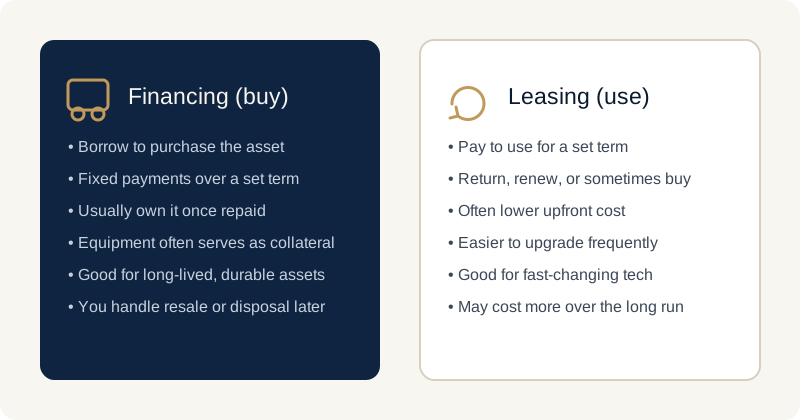
Equipment can be acquired two broad ways: financed (borrow to buy, and generally own it once repaid) or leased (pay to use it for a term, then return, renew, or sometimes buy). They solve different problems. Financing suits durable assets you intend to keep; leasing suits fast-changing technology or short-term needs. We compare them directly further down, but it’s worth holding the distinction in mind from the start.
How it works: the asset secures the loan
The mechanics are straightforward, and the collateral is what makes them distinctive.
The equipment as collateral
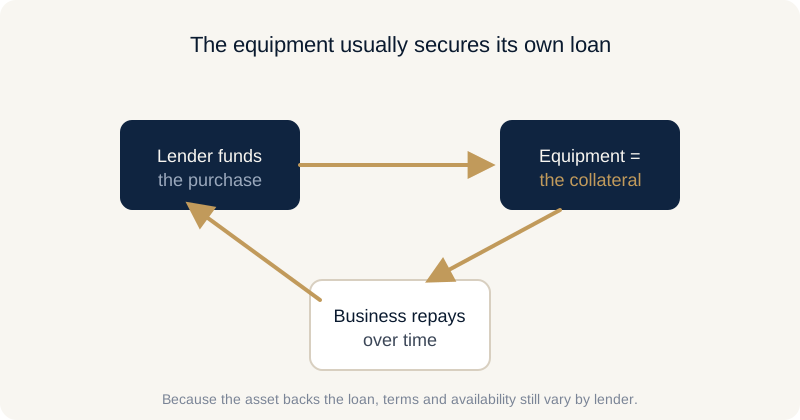
In most equipment financing, the item being purchased serves as security for the loan — a structure sometimes called self-securing. Because the lender can claim the equipment if payments stop, the arrangement carries built-in collateral without pledging other business assets. That can make equipment financing easier to structure than fully unsecured borrowing, though it does not remove risk: missing payments can mean losing the very equipment the business relies on, and many lenders still ask the owner for a personal guarantee on top of the collateral.
Down payments and how much gets financed
Some lenders finance the entire purchase price; others ask for a down payment, often a percentage of the equipment’s cost. How much a lender will finance depends on the equipment’s type, age, and resale value, along with the strength of the application. Newer, widely-used equipment that holds its value tends to be financed more readily than highly specialized or rapidly-depreciating items. Asking each lender how much of the price they’ll cover, and whether a down payment applies, is a routine question.
Terms tied to the equipment’s useful life
Repayment terms are frequently matched to how long the equipment is expected to stay useful. Financing a durable machine that will run for a decade may come with a longer term than financing technology expected to be replaced in a few years. This alignment is deliberate: it aims to keep you from still paying for equipment long after it has stopped earning its keep.
What lenders typically look for
There’s no single universal checklist — standards differ meaningfully from one lender to the next. But a familiar set of factors recurs, and understanding them helps you see an application the way a lender does.
Personal and business credit
For most small businesses, lenders review both the company’s credit profile and the owner’s personal credit, since owners frequently guarantee the debt. If you haven’t looked at your report recently, How to Read Your Credit Report covers what lenders will see, and What Credit Score Do You Need for Business Funding in New Jersey? explains why there’s rarely one magic number.
Time in business and revenue
Lenders want evidence of consistent revenue and enough operating history to show a pattern the business can support the payments. Newer businesses and those with uneven revenue aren’t automatically excluded — the collateral helps — but they may face narrower options, larger down payments, or different terms. Minimums for time in business and revenue vary widely.
The equipment itself
Because the asset is central, lenders assess it directly: the price and a quote or invoice, the type and age, and how well it holds value. Standard, resalable equipment is generally viewed more favorably than niche or fast-depreciating items, since the lender’s security rests on what the equipment would be worth if they had to claim it.
Documents lenders may request
Exactly what’s asked for depends on the lender and the size of the financing, but requests commonly include some combination of: a quote or invoice for the equipment, recent business bank statements, business and sometimes personal tax returns, financial statements, business formation documents, and details of existing debt. Organizing these before you apply tends to make the process smoother — the full preparation walkthrough lives in How to Prepare Your Business Before Applying for Funding in New Jersey.
What equipment financing can cost
The rate is only part of the picture. Two offers with the same rate can cost different amounts depending on the term, the down payment, and the fees.
Interest and how rates are set
Equipment financing commonly carries a fixed rate, which makes payments predictable across the term. The rate a business is offered depends on factors like credit, time in business, the equipment, and the down payment — stronger applications and assets that hold value tend to be viewed more favorably. Because the loan is secured by the equipment, rates can differ from unsecured borrowing, though no rate is guaranteed and every lender prices differently.
Fees and other charges
Beyond interest, financing can carry fees: an origination or documentation fee to set up the loan, a UCC filing fee to record the lender’s interest in the equipment, and sometimes prepayment penalties if you pay it off early. None are universal, but they affect the true cost, so it’s worth reading the full fee schedule rather than anchoring on the rate alone.
How repayment works
Repayment is usually a fixed installment on a set schedule until the balance reaches zero, at which point the business typically owns the equipment free and clear. The predictability is a strength: the payment is a known line item you can plan the equipment’s expected return against. The trade-off is rigidity — the payment is owed in slow months and busy months alike, whether or not the equipment is fully earning yet.
Pros and cons, honestly
Advantages
It preserves working capital by spreading a large purchase over time instead of paying all at once. The equipment usually serves as its own collateral, which can make it easier to structure than unsecured borrowing. Rates are often fixed, so payments are predictable and easy to budget. And it builds toward ownership — once repaid, the asset is yours to keep or sell.
Disadvantages
The equipment is at risk if payments aren’t made, and many lenders also require a personal guarantee. Payments are fixed regardless of revenue swings. A down payment may be required, and financing ties you to a specific asset that can still depreciate or become obsolete before the loan is repaid. For fast-changing technology, ownership can even be a drawback rather than a benefit.
How it compares to other options
Versus a general term loan
A term loan also delivers a lump sum repaid on a fixed schedule, but it’s general-purpose and not necessarily tied to a specific asset. Equipment financing is a term loan’s specialized cousin: purpose-built for one purchase and secured by it. When the goal is buying a defined piece of equipment, the equipment-specific route often structures more naturally around the asset. When the need is broader, a general term loan may fit better.
Versus a line of credit
A business line of credit is revolving — draw, repay, draw again — and suits recurring or unpredictable working-capital needs, not a single defined purchase. Equipment financing is the opposite shape: one asset, one loan, one payoff. Many businesses hold both, using a line for cash-flow timing and equipment financing for durable purchases. The two products are compared side by side in Business Line of Credit vs. Term Loan.
Versus leasing
Leasing pays for the use of equipment over a term, then returns, renews, or sometimes buys it. It often means lower upfront cost and easier upgrades, which suits fast-changing technology, but it can cost more over the long run and doesn’t build ownership. Financing suits durable assets you intend to keep. The honest question is how long you’ll actually use the equipment and whether owning it at the end has value for your business.
When it makes sense — and when it doesn’t
Good fits
Equipment financing is at its best for durable, long-lived assets that directly help the business earn: a delivery vehicle, a manufacturing machine, commercial kitchen or medical equipment, or core technology infrastructure expected to last. In each case the equipment produces value over years, the amount is known, and matching a predictable payment to that useful life is efficient. Preserving cash for operations while the asset pays for itself is the classic reason it works.
Poor fits
The same structure becomes a hazard for the wrong purchases. Financing rapidly-obsolete technology can leave you paying for equipment worth a fraction of the balance. Buying more capacity than the business can use ties up payments in an idle asset. And using equipment financing to prop up a struggling operation tends to postpone a problem rather than solve it. If the equipment won’t reliably earn more than it costs to finance, the math rarely works.
How to compare offers responsibly
If you receive more than one offer, comparing them fairly takes a little structure, because lenders present terms differently. Rather than anchoring on the advertised rate alone, line the offers up across the factors that actually determine cost and fit:
- The interest rate — and whether it’s fixed or variable.
- The down payment required and how much of the price is financed.
- Every fee: origination, documentation, UCC filing, and any prepayment penalty.
- The term length and whether it fits the equipment’s useful life.
- Whether a personal guarantee is required, and the total cost of the loan over its full term.
The honest comparison isn’t “which rate is lowest” in isolation, but “which offer costs least over the full term for the equipment I’m actually buying.” A longer term can lower the monthly payment while raising the total paid, so weigh both.
How to prepare before you apply
A little preparation tends to make an application clearer and less stressful, whatever the outcome. Get a firm quote or invoice for the exact equipment so the lender knows precisely what’s being financed. Know your numbers: recent revenue, cash-flow patterns, and existing debt. Gather the documents a lender is likely to request so you’re not scrambling mid-process. Review both your business credit and your personal credit report so nothing on them surprises you. And be honest about whether the equipment will earn more than it costs to finance — that single question decides whether the loan is a good idea. One practical note on credit: pre-qualification checks are frequently soft inquiries, while formal applications may involve hard inquiries, so it’s reasonable to ask each lender which they use before you apply.
Common reasons applications are denied
Applications don’t always succeed, and understanding the usual sticking points can help you strengthen a future one. Lenders commonly cite factors such as limited time in business, revenue that’s too low or inconsistent for the payment, weak business or personal credit history, high existing debt, or equipment that’s hard to resell or holds value poorly — which weakens the collateral the loan depends on. Incomplete documentation and a missing or vague equipment quote also slow or sink applications. A denial from one lender isn’t a verdict from all of them, since criteria differ, but it’s a useful signal about which area to shore up. Building business credit and tightening documentation over time can widen the options available later; Can You Get Business Funding With Bad Credit in New Jersey? covers that ground in depth.
Questions to ask a lender
Before you commit, a handful of direct questions can surface the details that matter most:
- Is a down payment required, and how much of the price will you finance?
- Is the rate fixed, and what is the total cost over the full term?
- What fees apply — origination, documentation, UCC filing, prepayment?
- Is a personal guarantee required in addition to the equipment collateral?
- Will the application involve a soft or hard credit inquiry, and do you report to personal credit?
Your next-step checklist
- Confirm the exact equipment and get a firm quote or invoice.
- Check whether the asset will earn more than it costs to finance.
- Review both your business and personal credit before anyone else does.
- Gather bank statements, financials, tax returns, and formation documents.
- Compare offers on rate, down payment, fees, term, and total cost together.
- Remember qualification depends on lender review and eligibility — nothing here guarantees approval.