
Published July 8, 2026 · Educational information — not legal, tax, lending, or financial advice.
Part of the Home Buying & Credit Resource Center.
Quick answer
Usually, yes — and the reason is pricing, not approval. Mortgage lenders generally price loans in score tiers: the tier you apply from shapes the rate you’re offered, and on a loan repaid over decades, even a small rate difference compounds into tens of thousands of dollars. If a few months of paid-down balances, on-time payments, or a corrected report error would move you into a better tier, preparation is some of the best-paid work in personal finance.
The honest counterweight: if you’re already comfortably inside a strong tier, or if waiting means facing meaningfully higher prices or rates, delaying buys less. This isn’t a rule — it’s a calculation, and this article gives you the pieces: what moves a file, how fast each lever works, how much runway you need, and the mistakes that undo months of effort in a single afternoon.
Why preparation matters
Here’s the shift in thinking that changes everything: the useful question isn’t “will I be approved?” but “what will the loan cost me?” Approval is a threshold; price is a spectrum. Lenders sort applicants into score tiers, and each tier up generally earns a better rate offer. Because a mortgage is measured in hundreds of thousands of dollars and repaid over decades, a fraction of a percentage point isn’t a rounding error — it’s a different monthly payment for thirty years and a dramatically different total interest bill (the full mechanics are in how your credit score affects mortgage interest rates).
This is why “I already qualify” can be an expensive place to stop. Two buyers can both be approved for the same house — one from a higher tier, one from a lower — and quietly live in very different loans for decades. Preparation is how you choose which of those buyers you are. And there’s a second benefit that gets less attention: a prepared file — reviewed reports, no surprises, clean recent history — moves through underwriting with fewer conditions, fewer document requests, and less stress at exactly the moment you’re also negotiating a purchase.
One more framing worth holding onto: improving your credit before a mortgage isn’t about chasing a perfect score. Lenders typically qualify you on the middle of your three bureau scores, and tiers have boundaries — the work is about crossing the next boundary, not reaching 850. Where those boundaries roughly sit by program is covered in what credit score do you need to buy a house.
Credit utilization: the fast lever
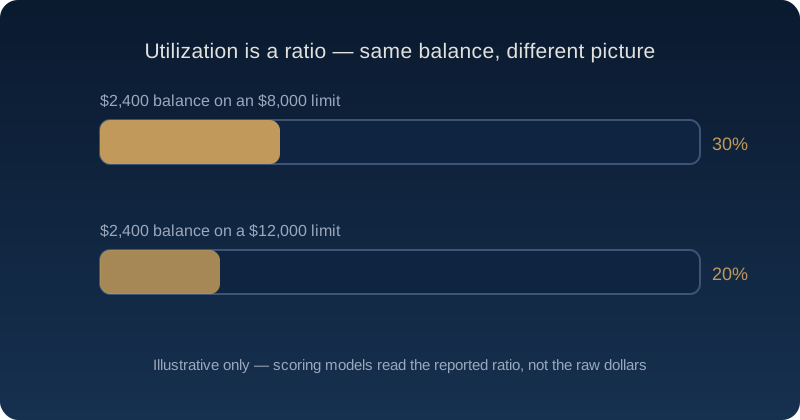
Credit utilization is the share of your available revolving credit you’re actually using — card balances divided by card limits — and it’s the lever that moves fastest, because it has no memory. Card issuers report balances roughly monthly, and scoring models generally react to the current reported picture. Pay a high balance down this month, and within a reporting cycle or two, the file reflects it. No other major score factor responds that quickly.
For a mortgage-bound buyer, that speed is a gift. If your middle score sits near a tier boundary and your cards are reporting high relative to limits, paying balances down in the final two or three months before applying is often the single highest-leverage move available. Lower reported balances tend to help twice: the utilization improvement supports the score, and the smaller balances lighten the debt side of your debt-to-income ratio, which lenders weigh separately from the score.
Two practical notes. First, utilization is measured on what reports, not what you owe on the due date — a card you pay in full can still report a high balance if the statement cuts before your payment lands, so time the paydown to land before the statement date. Second, keep the accounts open: closing a paid-off card removes its limit from the math and can push utilization up, which is exactly the wrong direction at exactly the wrong time.
Payment history: the heavy lever
Payment history is the most heavily weighted ingredient in what makes up your credit score — and it’s also the factor a mortgage underwriter reads most literally, line by line, when they open your reports. It moves slowly in both directions, which cuts two ways for a homebuyer. The bad news: a payment reported 30 days late in the run-up to an application is one of the most damaging single events a file can absorb, and there’s no fast repair — recency is what makes late payments sting, and only time reduces recency. The good news: every on-time month you add is doing quiet, compounding work, and underwriters weight recent history heavily. A file whose last 12–24 months are spotless reads well even when older history is imperfect.
So the payment-history strategy before a mortgage is almost embarrassingly simple: make it impossible to be late. Put every account on autopay for at least the minimum, keep manual payments on top when you want to pay more, and treat the smallest accounts with the same seriousness as the largest — a $20 store card reported late does the same category of damage as a big one. If your history already has scars, the plan isn’t to fix the past; it’s to make the present overwhelming. The rebuilding arc — how long different marks take to fade and what recovery typically looks like — is mapped in how long do late payments stay on your credit report.
Reviewing your credit reports
Before you spend a single month optimizing, read what you’re optimizing — all three reports, because mortgage lenders pull all three and typically qualify you on the middle score. That detail changes the review: an error dragging down one bureau’s file can drag your qualifying score with it, even while the other two look fine (why the three differ at all is explained in why are my three credit scores different).
Read each report the way an underwriter will: every account yours, every balance current, every limit accurate, late payments only where they truly happened, no accounts you don’t recognize, no collections that belong to someone else. The layout takes some decoding the first time — how to read your credit report walks through it section by section. If you find something wrong, dispute it early: the dispute process is free but takes weeks to resolve, and an unresolved dispute sitting on a file during underwriting can itself become a complication. This is the reason report review belongs at the start of the timeline, not the end.
And check in along the way without fear: reviewing your own credit is a soft inquiry. It never costs the file anything — the buyers who check constantly and the buyers who never look pay the same: nothing.
How much runway you need
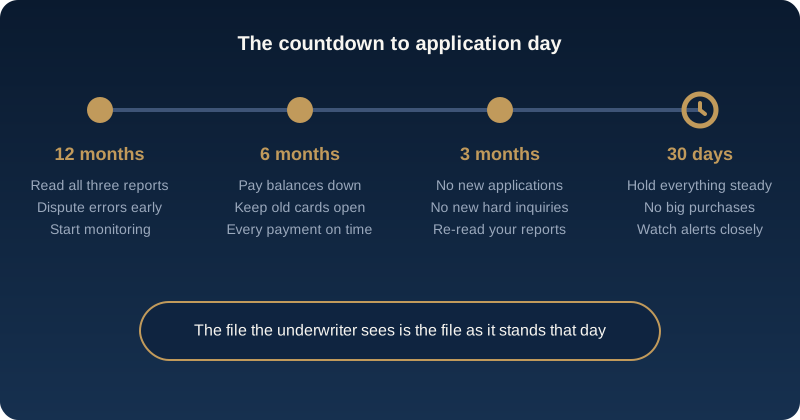
Twelve months is the comfortable answer. It’s enough time to pull and review all three reports, run any disputes to completion, build a clean recent payment streak, pay balances down without straining the budget, and let any past inquiries age — all without a single rushed decision. Six months still allows real movement: utilization responds within cycles, and half a year of perfect payments is a meaningful recent record. Even 30–60 days isn’t nothing — a focused balance paydown can register within a statement cycle or two.
What shortens with the runway is the menu. At twelve months, everything is on the table. At three, the slow levers — aging a late payment, building history — are gone, and you’re working with balances and errors. At thirty days, the job is mostly “hold steady and don’t break anything.” The countdown below is the same rhythm detailed in preparing your credit before buying a home and, for milestone check-ins, how long before buying a house should you check your credit.
Things not to do
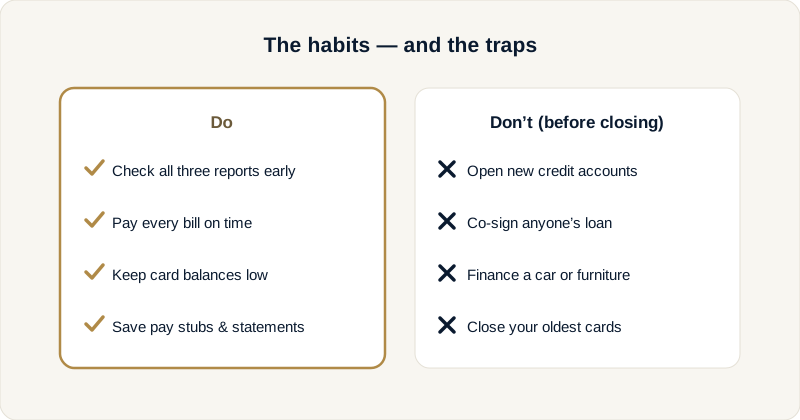
Months of careful preparation can be undone in an afternoon, so the don’t list deserves equal billing. Don’t open new credit — a new card or loan adds a hard inquiry, drops your average account age, and raises exactly the “taking on new obligations” question a mortgage file least wants to raise. Don’t finance anything large — the classic mistake is the car (or the furniture for the new house) financed weeks before applying; the new payment lands directly on your debt-to-income ratio. Don’t close old cards — it shrinks your available credit and can raise utilization; a paid-off card sitting quietly open is helping you.
Don’t miss anything — one 30-day late in the application window is the most expensive single mistake on this list. Don’t co-sign — someone else’s loan becomes your obligation in a lender’s math. And don’t move large sums of money around undocumented — underwriters trace big deposits, and clean paper trails keep an easy file easy. Critically, all of this discipline runs through closing day, not just to the application — lenders commonly refresh their view of your credit and finances before funding, and the deal isn’t done until it’s done. Each of these mistakes gets a full unpacking in common credit mistakes before applying for a mortgage.
The preparation checklist
Pulled together in one place — roughly in order:
- Pull all three credit reports and read every line — the middle score qualifies you, so all three files matter.
- Dispute genuine errors immediately — disputes take weeks, and you want them resolved before underwriting, not during.
- Put every account on autopay for at least the minimum — make a late payment structurally impossible.
- Pay card balances down — timed to report before statement dates — while keeping every account open.
- Freeze new credit activity — no new cards, loans, financing, or co-signing from three months out through closing day.
- Protect the down payment and reserves — cash strength is file strength; don’t spend it fixing things nobody asked you to fix.
- Ask a loan officer where your middle score sits relative to their pricing tiers — it turns “improve my credit” into a specific, finishable goal.
Key takeaways
- The question is price, not approval — your score tier sets the rate, and the rate compounds for decades.
- Utilization is the fast lever (balances report monthly); payment history is the heavy one (recent months carry the most weight).
- Review all three reports at the start of the timeline — the middle score qualifies you, and one bureau’s error can set your price.
- Twelve months is comfortable, six is workable, thirty days is “hold steady” — the runway decides which levers you have.
- The don’t list — no new credit, no big financing, no closed cards, no late payments — runs through closing day, not just to the application.