
Published July 5, 2026 · Educational information — not legal, tax, lending, or financial advice.
Quick answer
Your three scores differ because Experian, Equifax, and TransUnion are separate companies keeping separate files — and lenders don't always report to all three, don't report on the same day, and different scoring models calculate the same file differently. Modest gaps are normal and not a sign anything is wrong. What deserves attention is a large, unexplained gap, which usually means one file contains something the others don't — and the way to find it is to review the underlying reports, not the numbers.
Three bureaus, three separate files
The starting point most people miss: there is no single national credit file. Experian, Equifax, and TransUnion are independent companies, each maintaining its own database built from whatever lenders and furnishers send them. They don't share information with each other. A score is a calculation run against one bureau's file at one moment — so three files naturally produce three results. If the distinction between the file and the number is fuzzy, our plain-English comparison of credit reports vs credit scores is the two-minute version.
Lenders don't report everywhere
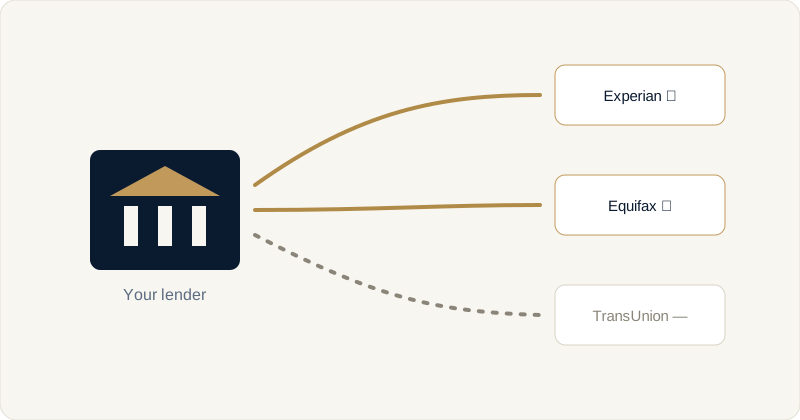
Reporting is voluntary. Many major lenders report to all three bureaus, but plenty don't — some regional banks, credit unions, and specialty lenders report to one or two. When your car loan appears at two bureaus and not the third, the third bureau is scoring a thinner file. This is one of the most common sources of genuinely large gaps, and it's invisible until you compare the reports side by side.
Timing: the calendar effect
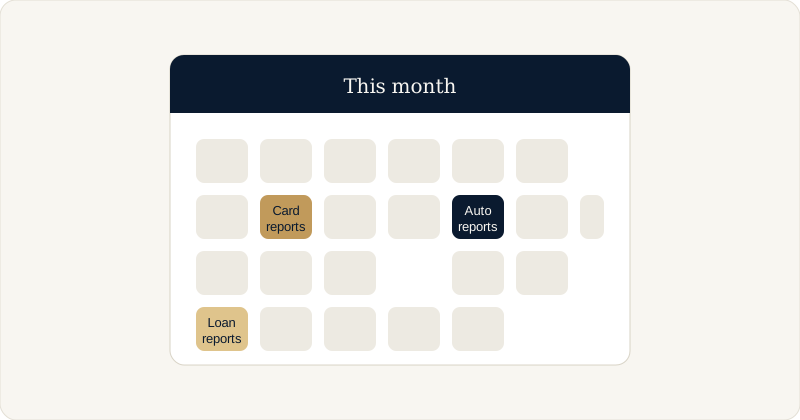
Even lenders that report everywhere don't report everywhere on the same day. Your card issuer might update mid-month, your auto lender at month-end. Check all three scores on the 20th and one bureau may already show this month's balances while another still shows last month's. This is also why scores seem to move overnight — the calculation simply caught a fresh delivery of information at one bureau first.
Different scoring models, different math
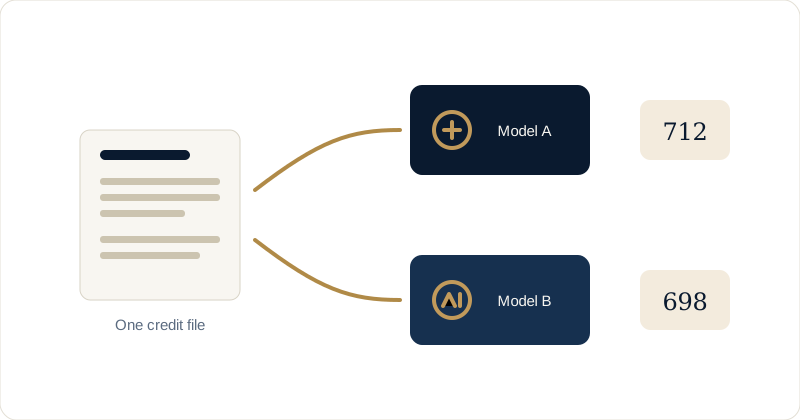
On top of different files, there are different formulas. Multiple scoring models exist — FICO and VantageScore are the widely known families, and each has versions — and they weigh the same information somewhat differently. Run two models against an identical file and you'll get two numbers. Run them against three slightly different files and small gaps are simply the expected output. The underlying factors are the same plain-English concepts either way: payment history, utilization, account age, inquiries, and mix.
Which score do lenders use?
It depends on the lender and the product. Some pull a single bureau, some pull two, and mortgage lenders commonly pull all three and typically use the middle score. You generally don't get to choose which file a lender looks at — the same is true when you apply for business funding — which is the practical argument for keeping all three accurate rather than optimizing for one. For orientation on the ranges themselves, see what's commonly considered a good credit score.
Two real-world examples
The credit-union car loan. Luis finances a truck through a local credit union that reports to Equifax and TransUnion only. Eighteen months of on-time payments show up on two files — his Experian file never sees the loan. His Experian number runs noticeably different from the other two, and the gap has a one-line explanation sitting in the reports.
The mid-month check. Priya checks all three scores on the 18th. Her card issuer reported a nearly-paid-off balance to one bureau on the 15th; the other two still show the prior statement's higher balance. For about a week, the same financial life produces three different utilization pictures — then the other bureaus' updates arrive and the numbers drift back together.
Key takeaways
- Three separate companies keep three separate files — there is no single master score.
- Lenders report voluntarily, not always to all three bureaus, and not on the same day.
- Different scoring models do different math on the same information.
- Modest gaps are normal; large unexplained gaps are a reason to compare the reports.
- Accuracy across all three files matters more than making the numbers match.