
Published July 19, 2026 · Educational information — not legal, tax, lending, or financial advice.
Quick answer
Three-bureau credit monitoring watches your credit files at all three major bureaus — Experian, Equifax, and TransUnion — simultaneously, and alerts you when anything changes on any of them. Because not every lender reports to every bureau, and because errors and fraud can appear on one file but not the others, single-bureau monitoring leaves two files unwatched. Three-bureau coverage closes that blind spot, which matters most when you’re preparing for a mortgage or business funding, rebuilding after a setback, or recovering from fraud exposure. Every monitoring check is a soft inquiry, so it never affects your score — and no monitoring, at any tier, raises a score by itself.
Why you have three credit files, not one
The three national bureaus each maintain their own file on you, built from whatever lenders and other furnishers choose to report to them. That word choose is the whole story: reporting to the bureaus is voluntary, and not every lender reports to all three. A credit union might report to two; a regional lender to one; a collection agency to whichever bureaus it works with. Add the fact that updates land on each bureau’s own schedule, and you get three files that agree on the broad strokes but differ in the details — sometimes in details that matter.
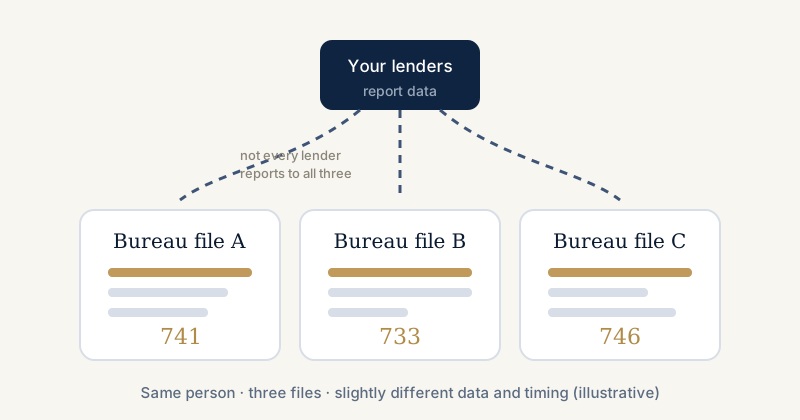
This is also why your three scores are usually three different numbers — the models are scoring three different underlying files. We unpack that fully in why are my three credit scores different; this article is about the monitoring consequence: if the files differ, watching one of them is not the same as watching your credit.
The single-bureau blind spot
Most free monitoring — from banks, card apps, and free score tools — watches a single bureau. That’s genuinely useful, and for some people it’s enough. But it comes with a structural limitation that’s easy to miss until it bites: a change that lands only on an unwatched file is invisible to you.
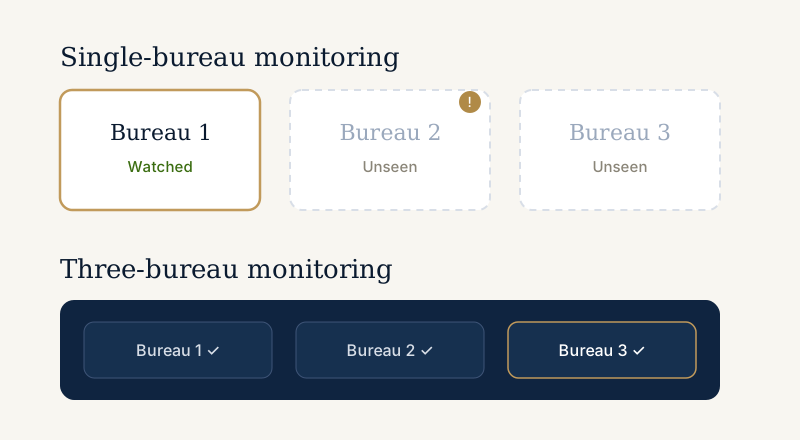
Concretely, that unwatched change might be a collection account reported to only two bureaus, an unauthorized hard inquiry on a file you never look at, a fraudulent account opened with a lender that reports to a bureau your app doesn’t cover, or simply an error — a payment marked late on one file and current on the others. None of it announces itself. It sits there until something forces a look at that specific file, and too often the “something” is a lender reviewing your application. That’s the exact too-late timing problem monitoring exists to prevent, and it’s doubly frustrating when you were monitoring — just not the file that changed.
Lender behavior makes the gap concrete. Mortgage lenders commonly review credit from all three bureaus; other lenders may pull one or two, and you usually can’t know in advance which. Preparing for an application while watching one file means preparing against a partial picture of what your lender may see — the same reason we walk through each bureau’s role in what happens during a mortgage credit check.
How three-bureau monitoring works
Mechanically, three-bureau monitoring is the same idea as any monitoring — compare a file against its last known state, alert on differences — done in parallel across all three files. If you’re new to how that watching works in general, start with what is credit monitoring; everything there applies here, times three.
- Parallel coverage. The service watches Experian, Equifax, and TransUnion independently, so a change on any file triggers an alert — and the alert tells you which bureau changed, which is often the first diagnostic clue.
- Three scores, side by side. Seeing all three numbers together turns bureau differences from a mystery into information. A file that’s notably out of line with the other two is worth reading closely — that gap is how missing accounts, stale data, and errors get noticed.
- Soft inquiries only. Every check the service performs is a soft inquiry. Watching three files instead of one doesn’t multiply any score impact, because there is none to multiply — the same principle covered in does checking my own credit hurt my score.
- Alerts, not judgments. An alert means “this file changed,” not “something is wrong.” Most alerts are your own normal activity showing up on schedule. How to read them calmly — and what to do when one is unexpected — is the subject of how credit alerts help you stay informed.
One expectation worth setting: three-bureau monitoring shows you the differences between your files — it doesn’t erase them. Bureaus update as furnishers report, so a new account may appear on one file days before the others. That lag is normal, and seeing it happen is part of understanding your own credit rather than being surprised by it.
When full coverage matters most
Honest framing: three-bureau monitoring is not equally valuable to everyone at every moment. It earns its keep in specific situations.
- Before a mortgage. Since mortgage lenders commonly review all three files, watching all three is the only way your preparation matches their review. The full playbook — timeline, quiet period, and all — is in how credit monitoring helps before buying a home, and pairs with preparing your credit before buying a home.
- Before business funding. Many funding reviews weigh the owner’s personal credit, and you rarely know which bureau a given lender will pull. Three-bureau awareness supports the preparation work across the Business Funding Center, alongside what credit score you need for business funding — and the full monitoring playbook for applicants is in how monitoring helps before applying for business funding.
- While rebuilding. If you’re working back from a setback, progress can show up unevenly across the files — and so can the occasional error that would quietly undo your work. Watching all three keeps the effort described in rebuilding credit after financial hardship visible and verifiable.
- After fraud or a data breach. A thief doesn’t helpfully open accounts only on the bureau you watch. After exposure, full coverage shortens how long anything can operate unnoticed — the awareness side of spotting identity theft.
And the honest other side: if you have no near-term applications, no fraud concerns, and you periodically read your full reports anyway, single-bureau tools plus your free annual reports may serve you fine. Full coverage is a fit for a season of higher stakes, not a moral obligation.
Choosing a three-bureau service
If full coverage fits your situation, evaluate services on the substance: confirm it truly monitors all three bureaus (some products show three scores but monitor fewer files), check which change types trigger alerts, and read the pricing, billing, and cancellation terms before you enroll. Identity-protection features — dark-web scanning, resolution support, identity-theft insurance on applicable plans — vary by plan and are worth weighing on their own merits. Neutral guidance on reports and scores from the Consumer Financial Protection Bureau is a good companion to any service’s marketing page, and our broader criteria live in free vs. professional credit monitoring and is credit monitoring worth paying for.
For readers who want professional three-bureau monitoring, Credit Consultants Group recommends and provides education around MyFreeScoreNow — an independent third-party platform offering three-bureau scores and reports, daily monitoring and alerts, and identity-protection features that vary by plan. Our full reasoning, including the verified feature set, is in why we recommend MyFreeScoreNow, and the Credit Monitoring hub collects everything in one place. Whatever you choose, review the current plan terms first against the wider checklist in what to look for in a credit monitoring service — and remember that monitoring at any tier is awareness, not repair.
Key takeaways
- You have three separate credit files — reporting is voluntary and timing varies, so they rarely match exactly.
- Single-bureau monitoring leaves two files unwatched; changes there stay invisible until something forces a look — often a lender.
- Three-bureau monitoring watches all three files in parallel and tells you which bureau changed — often the first diagnostic clue.
- Every monitoring check is a soft inquiry — full coverage never touches your score, and no monitoring raises one.
- Full coverage matters most before mortgages and funding, during rebuilding, and after fraud exposure; review any plan’s terms before enrolling.