
Published July 19, 2026 · Educational information — not legal, tax, lending, or financial advice.
Quick answer
Credit monitoring helps home buyers by closing the gap between when something changes on a credit file and when you find out. Months out, that means errors and surprises surface while there’s still runway to dispute or address them. Close to application, it means watching balances and activity settle. And between application and closing — when many lenders re-verify credit — alerts confirm that nothing unexpected has appeared during the window where new activity causes the most trouble. Monitoring checks are soft inquiries that never affect your score, and monitoring never raises a score or guarantees approval; it makes sure your preparation covers the same ground your lender’s review will.
Why mortgages are the highest-stakes credit review
Most credit checks are a glance; a mortgage review is a reading. Lenders commonly pull credit from all three bureaus, weigh your debt-to-income ratio alongside your file, and route everything through underwriting — a process we walk through step by step in what happens during a mortgage credit check. Your credit profile also influences pricing, not just approval: the connection between your file and what you pay is the subject of how your credit score affects mortgage interest rates.
Two features of that review make timing everything. First, its thoroughness means small items you’d never notice — a stray collection, a misreported late payment, an account you don’t recognize — get noticed. Second, disputes and corrections take time: a bureau investigation of a disputed error generally runs about 30 days, and the underlying fix can take longer to appear everywhere. Discover a problem six months out and it’s a task; discover it in underwriting and it’s a crisis. Monitoring exists to move that discovery to the early side — the same reason behind the broader guidance in how long before buying a house should you check your credit.
A monitoring timeline for home buyers
Here’s how monitoring maps onto a typical preparation arc. Timelines vary by person and market, so treat this as orientation, not a schedule.
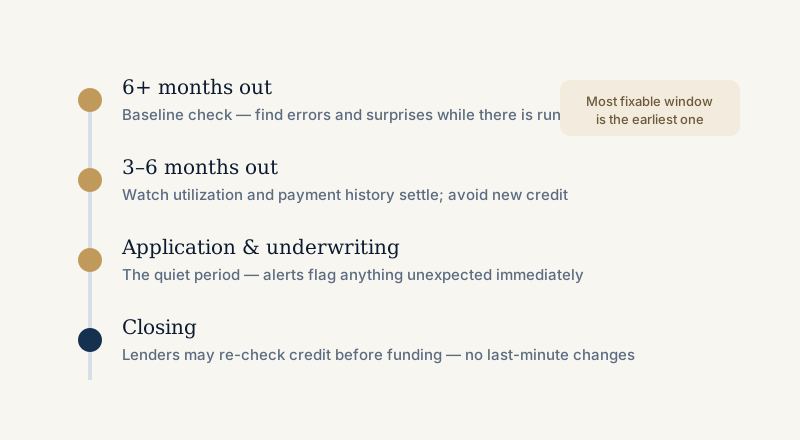
- Six or more months out: establish the baseline. Read all three full reports — you’re entitled to free ones at AnnualCreditReport.com — and turn monitoring on so changes from that baseline reach you automatically. Knowing how to read your credit report turns this from a formality into a real audit. Anything wrong gets disputed now, while the clock is friendly.
- Three to six months out: watch things settle. This is the window where habits show up in the file — balances coming down moves your utilization, payments post on time, and old issues age. Alerts confirm the file reflects the work. It’s also when to stop applying for new credit, since fresh hard inquiries right before a mortgage raise questions you don’t need. The full pre-application checklist lives in preparing your credit before buying a home and common credit mistakes before applying for a mortgage.
- Application through closing: hold steady and stay watchful. The file is now in a lender’s hands, and your job flips from improving it to not disturbing it — the quiet period, covered next.
If you’re rebuilding from a setback on the way to homeownership, the same timeline applies with a longer runway — monitoring keeps the progress described in rebuilding credit after financial hardship visible while you work toward application readiness.
The quiet period: application to closing
Here’s the part of the process that surprises the most first-time buyers: the credit review isn’t necessarily over when you’re approved to move forward. Many lenders re-verify credit activity before closing, and some watch for new accounts and debts during underwriting. A car loan, a furniture financing plan for the new house, even a large balance spike can change the numbers a lender approved — at the exact moment there’s the least time to explain or absorb it.
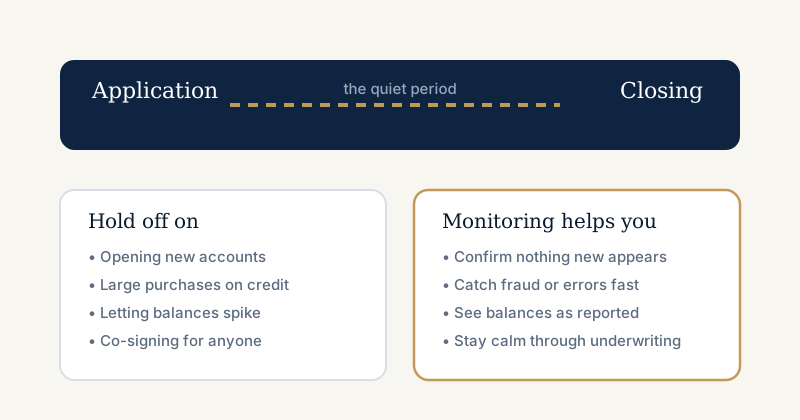
During this window, monitoring’s job inverts in a satisfying way. Earlier, alerts told you what needed fixing; now, silence is the good news — and an unexpected alert is exactly the thing you want to know about within hours, not at the closing table. An account you didn’t open, an inquiry you didn’t authorize, a balance that posted oddly: caught immediately, each is a problem you can get ahead of, sometimes starting with the steps in what to do if someone opens an account in your name. Caught at re-verification, it’s a delay at best. The denial patterns we catalogue in why mortgage applications get denied because of credit include exactly this kind of late-window change — and it’s among the most preventable items on that list.
Why all three bureaus matter here
For everyday awareness, single-bureau monitoring is a reasonable economy. Before a mortgage, it’s a mismatch: the lender’s review commonly spans all three files, and your three files are rarely identical — not every lender reports everywhere, timing differs, and errors can live on one file only. Watching one bureau while a lender reads three means your preparation and their review are covering different ground. The mechanics of full coverage — and an honest look at when it is and isn’t worth paying for — are in the companion piece, three-bureau credit monitoring explained.
For buyers who want that coverage professionally, Credit Consultants Group recommends and provides education around MyFreeScoreNow, an independent third-party platform offering three-bureau scores, reports, and daily monitoring alerts; our reasoning is in why we recommend MyFreeScoreNow, with the wider resource set at the Credit Monitoring hub. Review any plan’s features, pricing, billing, and cancellation terms before enrolling. The CFPB’s home-buying resources are a good neutral companion for the mortgage side of the journey.
What monitoring won’t do for your mortgage
Clear limits keep the tool useful. Monitoring will not raise your score — score movement comes from your own behavior in the file over time. It will not remove accurate negative items, and it is not the same as the dispute process (it’s how you find what’s worth disputing). It cannot guarantee approval, a rate, or a closing date — those turn on each lender’s review of your full profile, income, and documentation. And it doesn’t replace reading your actual reports; alerts are the alarm, the full report is the audit, and buyers need both. What it reliably does is make sure that when your lender looks at your credit — at application, during underwriting, and again before closing — you have already seen everything they’re about to see. In a process with this many moving parts, that’s the piece worth controlling. Credit Consultants Group provides education and guidance and does not guarantee approvals, rates, score increases, removals, or specific credit outcomes.
Key takeaways
- Mortgage reviews are the most thorough credit reads — commonly all three bureaus, and often re-verified before closing.
- Start the baseline six or more months out: read all three reports, turn monitoring on, and dispute errors while there’s runway.
- Between application and closing, hold steady: no new accounts, no large credit purchases, no balance spikes — and let alerts confirm nothing unexpected appears.
- Monitoring checks are soft inquiries — watch your credit daily through the whole process with zero score impact.
- Monitoring informs preparation; it never raises scores or guarantees approvals, rates, or timelines. Review any plan’s terms before enrolling.