
Published July 19, 2026 · Educational information — not legal, tax, lending, or financial advice.
Quick answer
Compare credit monitoring services on six things: coverage (one bureau watched, or all three), alerts (what triggers one, and how fast), access (scores, full reports, and score history), identity features, support, and terms (pricing, billing, trial, and cancellation you can actually read). Coverage, alerts, and access carry the most weight. Walk away from any service that guarantees score increases — no monitoring product raises a score at any price — or that hides its pricing or cancellation steps. Match the feature list to what’s at stake for you, not to the marketing.
Start with your goal, not the product
The same service can be a great fit for one person and an unnecessary expense for another, so the checklist starts before the shopping does: what are you monitoring for? Someone six months from a mortgage needs different coverage than someone doing routine upkeep — the application-driven cases are mapped in how monitoring helps before buying a home and before applying for business funding, and rebuilding after a setback adds its own reasons to watch closely, covered in rebuilding credit after financial hardship. Two prior questions also deserve honest answers first: whether to pay at all — worked through in is credit monitoring worth paying for — and what free tools already cover, compared in free vs. professional credit monitoring. This article picks up where those leave off: you’ve decided a service makes sense, and now you’re choosing one.
The big three: coverage, alerts, access
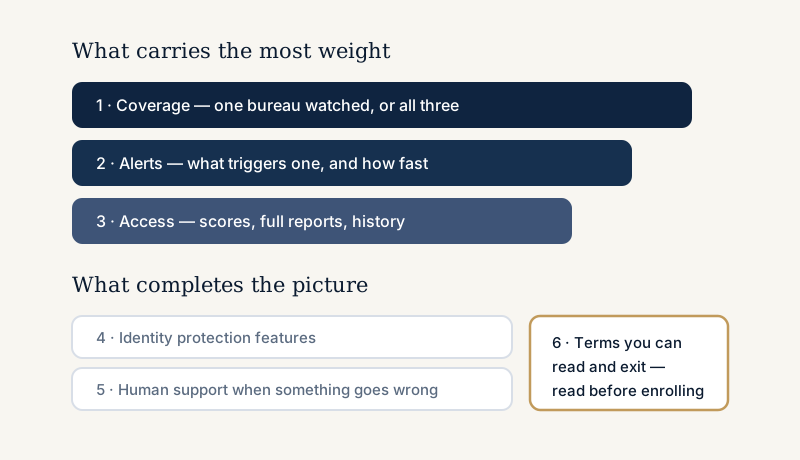
1 · Coverage: one bureau, or all three. This is the single biggest differentiator between services. Your Experian, Equifax, and TransUnion files are separate records that rarely match exactly, so a single-bureau service leaves two files unwatched — a reasonable economy for casual awareness, and a real blind spot when an application is coming, since you rarely know which file a lender will pull. The full mechanics of that trade-off are in three-bureau credit monitoring explained. Whatever a service advertises, confirm which bureaus it actually watches; vagueness here is itself an answer.
2 · Alerts: what triggers one, and how fast. New accounts and hard inquiries are the minimum — they’re among the earliest footprints of both legitimate applications and fraud. Stronger services also flag personal-information changes (new names, addresses, or employers on your file — a classic precursor to account takeover), new collections and public records, and meaningful score movement. Speed matters too: an alert that arrives within a day or two of the bureau recording a change is an early-warning system; a monthly digest is a newsletter. What the alerts mean and how to respond calmly when one arrives is the subject of how credit alerts help you stay informed.
3 · Access: scores, reports, and history. Alerts tell you that something changed; the file tells you what. A useful service shows you actual credit information — scores you can track and full report detail you can read, which pairs with knowing how to read your credit report. The strongest version adds history: a view of your score over months, so you can see a trend rather than a single day’s number — the value of that longer view is illustrated by features like FLASHBACK score history. And remember every check a service makes on your behalf, like every check you make yourself, is a soft inquiry — looking never costs you points.
The rest of the picture: identity, support, terms
4 · Identity-protection features. Many services layer identity tools over the credit watching — on applicable plans this can include identity-fraud insurance and resolution support. Judge these as a complement, not the core: the credit-file alerts are what surface misuse earliest, and if the worst happens the response steps in what to do if someone opens an account in your name apply regardless of which service you use. A headline feature like a dark-web scan matters less than whether the service watches the changes that actually precede damage.
5 · Support. Monitoring is self-serve until the day it isn’t — the confusing alert, the account you don’t recognize, the billing question. A reachable human, available on a schedule that matches when alarms actually go off, separates a service from a dashboard. Check how support is offered (phone, chat, hours) before you need it.
6 · Terms you can read and exit. The monthly price, what any trial includes and when billing starts, how cancellation works, and what each plan tier actually contains — all of it should be findable before you hand over payment details, and read before enrolling, not after. Features vary by plan and change over time, so treat the provider’s current published terms as the source of truth over any third-party description, including ours.
Green flags and red flags
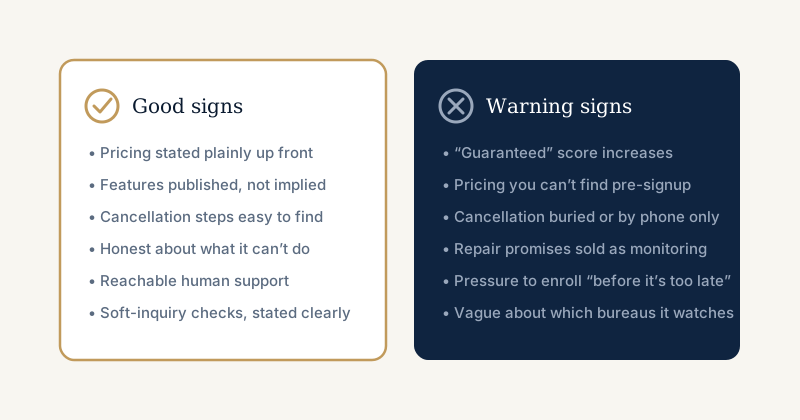
The single brightest red flag is a guaranteed score increase. No monitoring service raises a score — at any tier, at any price. Scores move because of what happens in your file over time; monitoring is how you stay informed about it. A service that promises otherwise is misdescribing what monitoring is, and that dishonesty rarely stops at the headline. Close behind: pricing you can’t find until you’ve entered a card number, cancellation that’s buried or phone-only by design, credit-repair promises dressed up in monitoring language, urgency tactics (“enroll before it’s too late”), and vagueness about which bureaus are watched. The green flags are the mirror image — plain pricing, published features, findable cancellation, honest limits — and they tend to travel together. For a neutral grounding in how credit reports and scores work while you evaluate, the Consumer Financial Protection Bureau’s resources are a good companion, and your free bureau reports at AnnualCreditReport.com remain available no matter which service you choose.
How we apply this checklist ourselves
Credit Consultants Group is an education platform, and we ran this same evaluation before recommending a monitoring partner. The platform we chose is MyFreeScoreNow — an independent third-party service we don’t own or operate — because its verified feature set maps onto the criteria above: three-bureau scores and reports, daily monitoring and alerts, identity-protection features including identity-fraud insurance on applicable plans, and 7-day-a-week support, with features that vary by plan. The complete reasoning is in why we recommend MyFreeScoreNow, and the wider resource set lives at the Credit Monitoring hub. The same rule we’ve repeated throughout applies to our recommendation too: review the current features, pricing, billing, and cancellation terms before enrolling, and choose based on your own goals.
Key takeaways
- Compare on six criteria: coverage, alerts, access, identity features, support, and terms — the first three carry the most weight.
- Bureau coverage is the biggest differentiator — confirm which files are actually watched, and match coverage to what’s at stake.
- A guaranteed score increase is the brightest red flag — no monitoring service raises a score, at any price.
- Monitoring checks are soft inquiries — being watched daily across all three bureaus never affects a score.
- Read any plan’s current pricing, billing, trial, and cancellation terms before enrolling — the provider’s published terms are the source of truth.