
Published July 15, 2026 · Educational information — not legal, tax, lending, or financial advice.
Quick answer
Personal credit is tied to you through your Social Security number and tracked by the consumer bureaus; business credit is tied to your company — usually through an EIN — and tracked by commercial bureaus with their own scoring. They’re genuinely separate files, but for smaller businesses they tend to influence each other: lenders often check the owner’s personal credit and require a personal guarantee, especially when the business credit file is young. Building business credit is a gradual, deliberate process, and it rarely removes personal credit from the picture entirely at small-business scale. Understanding where you stand on both sides is practical preparation — and a free Business Funding Snapshot is an educational place to start.
Two separate files, not one
The cleanest way to understand the difference is to picture two separate folders. One folder is you — your personal credit, tied to your Social Security number, built from your mortgages, cards, auto loans, and payment history, tracked by the three consumer bureaus, and summarized in the credit scores most people recognize. The other folder is your business — a distinct record of how the company handles its obligations, tied to the business (commonly through an EIN), tracked by commercial bureaus, and scored with their own models on their own scales.
Those folders are real and independent: a business can build a strong file while the owner’s personal credit is unremarkable, or vice versa. The catch is that, in everyday small-business lending, the two folders sit close together on a lender’s desk. The smaller and younger the business, the more often a lender opens the personal folder too. So “separate” is accurate in structure but not always in practice — and that nuance is where most of the useful understanding lives. If you’re new to how the personal side is tracked, our primer on the difference between a credit report and a credit score is a helpful companion.
How personal credit shows up in business funding
For most small businesses, personal credit is not a background detail — it’s a live part of the funding conversation. Lenders lean on it for a simple reason: when a business is young or its own credit file is thin, the owner’s personal track record is often the best available evidence of how obligations get handled. That shows up in a few concrete ways.
Many lenders run a personal credit check on the owners as part of underwriting. Personal guarantees — covered in detail below — tie the owner personally to the obligation. And some business credit cards check the owner’s personal credit at application and even report activity back to the consumer bureaus, meaning business spending can touch personal credit directly. Because of all this, understanding your personal position before a lender does is genuine preparation. It helps to know what counts as a good credit score, what actually makes up your score, and how credit utilization can move it — and it’s worth remembering that checking your own credit is a soft inquiry that doesn’t hurt your score. The deeper question of what credit score you need for business funding builds directly on this.
What business credit is — and how it’s established
Business credit is the company’s own reputation for handling money, kept by commercial credit bureaus and attached to the business rather than to any individual. Where personal credit draws on cards and consumer loans, a business credit file is built from things like trade accounts with suppliers, business cards and loans, and how promptly the business pays its bills. The scoring models differ from consumer scores — some emphasize payment timeliness heavily — and they live on their own scales, so a “good” business score isn’t the same number as a good personal one.
Crucially, business credit doesn’t appear automatically the moment you start a company. A file forms only once the business actually uses accounts that report to the commercial bureaus and those creditors send in the data. That’s why establishing business credit is an active project, not a passive result — a sequence of deliberate steps that this article walks through in the section on building it responsibly.
EIN vs. SSN
The two identifiers sit at the heart of the personal-versus-business distinction. Your SSN (Social Security number) identifies you as a person and anchors your personal credit. Your EIN (Employer Identification Number) identifies your business and anchors its business credit and tax filings. An EIN is issued by the IRS, and you can request one at no cost — it’s a foundational step for separating the business’s financial identity from your own.
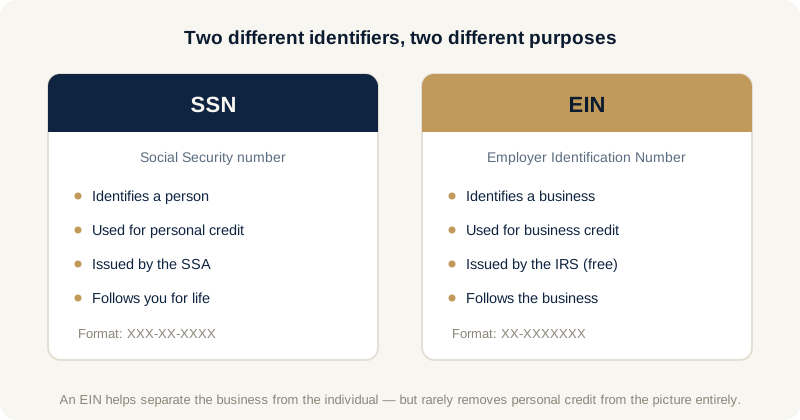
Here’s the important caveat: getting an EIN and using it does not, by itself, remove your personal credit from the equation. Lenders can still ask for a personal guarantee, still check owner credit, and still connect the two when a business is small. Think of the EIN as opening the business folder — not as closing the personal one.
Personal guarantees and why lenders require them
A personal guarantee is the single mechanism that most often links the two credit worlds, so it deserves a clear explanation. It’s the owner’s personal promise to repay a business obligation if the business itself cannot. Sign one, and a business debt is no longer fenced off from your personal finances — the lender can look to you individually if the business defaults.
Lenders require guarantees for understandable reasons. A young business has limited history to evaluate, and a thin business credit file offers little to go on, so the guarantee gives the lender meaningful recourse and signals that the owner has real skin in the game. Personal guarantees are common across small-business lending and appear in many products — including SBA loans, which typically require them from significant owners. None of that makes a guarantee bad; it makes it something to read closely and understand fully before signing, because it’s exactly where “business” debt can become personal.
How lenders evaluate both
When both files are in play, lenders don’t simply average two scores — they read each for what it tells them and weigh them according to the product and the size and age of the business. A rough sense of how that tends to work:
Personal credit as the character read
For smaller and newer businesses, personal credit often carries significant weight because it’s the most complete record available of how the person behind the business handles obligations. As a business matures, this weight can lessen — but it seldom drops to zero when a personal guarantee is on the table.
Business credit and financials as the capacity read
The business file, along with revenue, cash flow, and time in business, speaks to whether the business itself can support the obligation. A strong, established business file and healthy financials can open doors that personal credit alone can’t — and can reduce how heavily personal credit is weighed.
The whole picture
In the end, most lenders assemble a composite view: personal credit, business credit, financials, collateral, and the specifics of the request. That’s why preparation on both sides pays off, and why getting your documentation and numbers in order — the focus of how to prepare your business before applying for funding — matters as much as any single score.
Steps to build business credit responsibly
Building business credit isn’t complicated, but it is sequential and it rewards patience. Each step lays groundwork for the next, and the whole point is to create a positive, verifiable track record over time. For a dedicated walkthrough of the full sequence, see How to Build Business Credit.
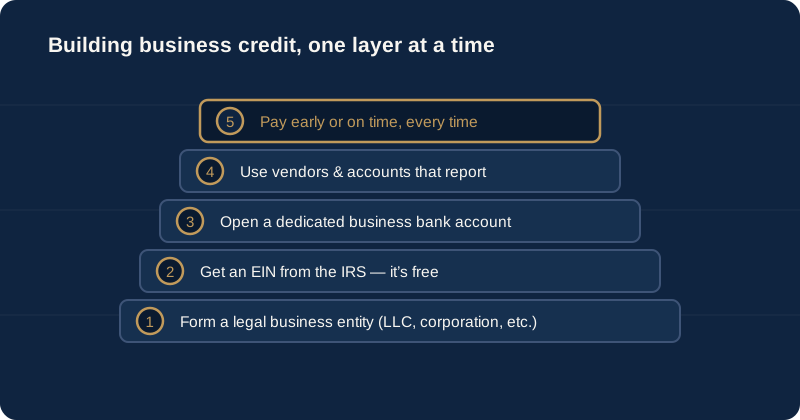
Separate the business first
Form a legal business entity, get an EIN from the IRS, and open a dedicated business bank account. This creates a clean line between business and personal finances — the foundation everything else rests on.
Use accounts that report
A business credit file only grows when creditors report activity to the commercial bureaus. Trade accounts with suppliers, business cards, and other accounts that report are what actually build the file — so it’s worth confirming that an account reports before relying on it to build credit.
Pay early or on time, consistently
Because some business scoring models weigh payment timeliness heavily, paying on time — or early where you can — is the most direct way to build a strong file. There’s no shortcut here: consistency over months and years is the mechanism.
Keep the personal side healthy too
Since the two remain connected for most small businesses, tending your personal credit is part of building business credit in practice. Keeping utilization sensible and payments current on the personal side protects the funding options that still lean on it.
Common misconceptions
“Once I have an EIN, my personal credit no longer matters.”
Not for most small businesses. An EIN opens the business folder, but lenders can still check personal credit and require personal guarantees. The two stay linked in common situations.
“Forming an LLC instantly gives my business credit.”
Forming an entity is a first step, not the finish line. Business credit forms only once the business uses accounts that report to the commercial bureaus and builds a payment history over time.
“Business and personal credit never affect each other.”
They can, in both directions. Some business cards report to consumer bureaus, and personal guarantees mean business trouble can reach personal credit. Treating them as fully walled off is risky.
“A good personal score guarantees business funding.”
It helps, but it doesn’t guarantee anything. Lenders also weigh business financials, cash flow, time in business, and the business credit file, and any promise of guaranteed approval is a red flag. Qualification depends on lender review and eligibility.
Where the Business Funding Snapshot fits
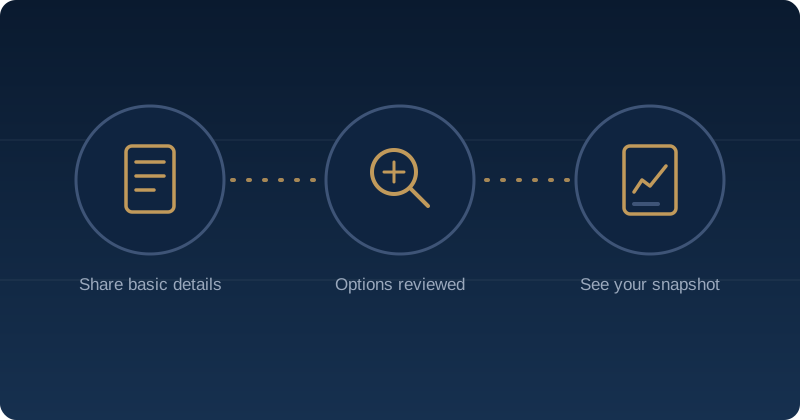
Understanding how your personal and business credit fit together is preparation; seeing what options that picture might support is the natural next step. That’s the job of the free Business Funding Snapshot, available through our enrollment partner. You share basic details about your business, and the snapshot gives you an educational overview of the funding your business may qualify for — quickly, with no obligation to continue. It’s designed for established businesses, and it is not an application or an approval: qualification and any funding offers depend on lender review and eligibility.
Free to start · No obligation · Subject to lender review and eligibility
Key takeaways
- Personal credit (SSN, consumer bureaus) and business credit (EIN, commercial bureaus) are separate files with separate scoring.
- For smaller businesses, the two are closely linked — owner credit checks and personal guarantees are common.
- An EIN opens the business folder but doesn’t remove personal credit from a lender’s review.
- Business credit is built deliberately: form the entity, get an EIN, open a business account, use reporting accounts, and pay on time.
- Lenders read both files together — preparation on both sides matters, and no score guarantees approval.