
Published July 17, 2026 · Educational information — not legal, tax, lending, or financial advice.
Quick answer
A credit alert is the notification a monitoring service sends when your credit file changes — a new account or inquiry, a balance or status change, a new derogatory item, or a change to your personal information. Its value is time: it shortens the gap between when something happens and when you find out, so you can catch an error, spot possible fraud, or simply confirm an expected change days or weeks sooner than you would on your own. Two honest notes: most alerts are routine confirmations, not emergencies, and an alert only informs you — to actually block new-account fraud you’d use a freeze, and alerts never raise or lower your score. Coverage varies by service and plan.
What a credit alert is
If credit monitoring is the service that watches your files, the alert is how that watch actually reaches you. It’s a short message — email, text, or app notification — that says, in effect, “something on your credit file just changed; here’s what.” The monitoring service compares your file against its last known state, and when it spots a difference, it turns that difference into a notification you can read in seconds.
The mental model that helps most: an alert is a messenger, not a verdict. It doesn’t judge whether a change is good or bad, and it doesn’t act on your behalf. It hands you a fact — a new account, a higher balance, an unfamiliar address — and leaves the interpretation to you. That distinction matters, because it’s the reason alerts are worth having without being anything to fear: most of the time they simply confirm something you already did.
The kinds of alerts you’ll get
Alerts aren’t a single thing; they map to the specific changes a service watches for. Knowing the categories in advance makes each one easier to read.
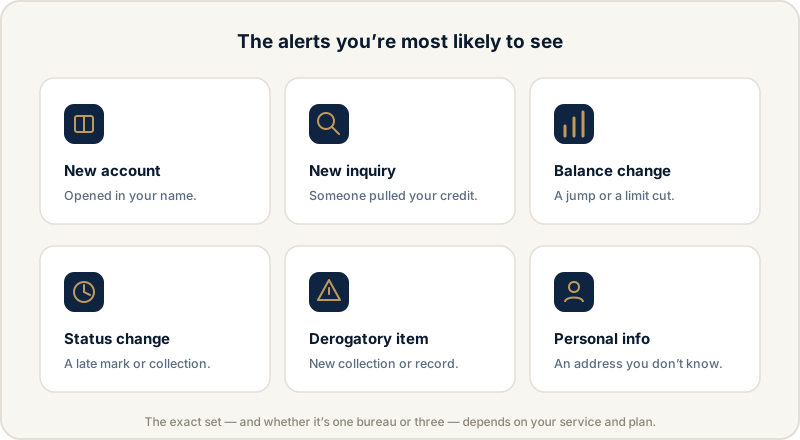
- New-account alerts. A card, loan, or line was opened in your name. Expected if it’s yours; an early fraud signal if it isn’t.
- Inquiry alerts. Someone pulled your credit. A hard inquiry you didn’t authorize deserves a closer look.
- Balance and limit alerts. A balance jumped or a limit was cut — both move your utilization, which many scores weigh heavily.
- Status-change alerts. A payment marked late, an account sent to collections, or a status flipping to derogatory.
- Derogatory or public-record alerts. A new collection, charge-off, or public record appearing on your file.
- Personal-information alerts. A new address, name, or employer you don’t recognize — often the quietest but most telling sign of trouble.
Whether these arrive from one bureau or all three — and how quickly — depends on the service, which is one more reason the free vs. professional comparison is worth reading before you settle on a tool.
How alerts help you act sooner
The entire benefit of an alert is compressed into one word: timing. Without monitoring, most people discover a problem at the worst possible moment — when a lender pulls their credit during an application. An alert moves that discovery forward, from “at the application” to “within days of the change,” and that head start is what turns a crisis into a manageable task.
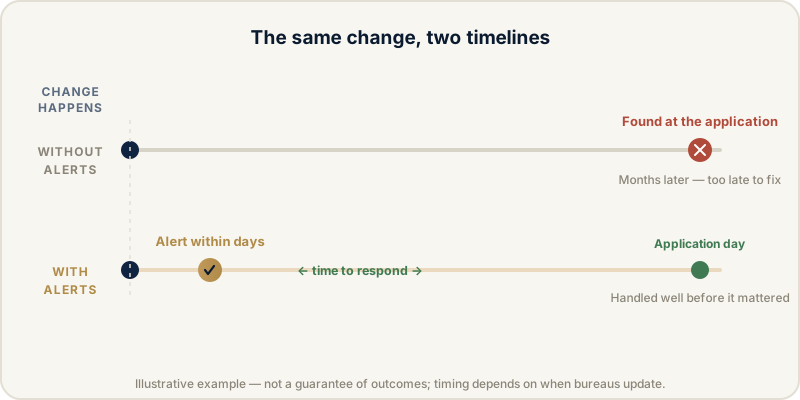
Consider three everyday cases. An error — a payment misreported as late — caught by an alert can be disputed long before it matters for a loan. Fraud — an account opened by someone else — caught early means less damage and easier cleanup, which is exactly where spotting identity theft and knowing what to do if someone opens an account in your name come in. And ordinary drift — a balance creeping up month over month — is easier to correct when you see it early rather than at year’s end; that steady feedback is exactly what makes rebuilding credit after financial hardship more sustainable. That continuous head start is the whole argument for monitoring year-round instead of glancing once in a while.
There’s a readiness angle, too. If a mortgage or funding decision is coming, alerts give you runway to fix issues before an underwriter sees them — the stage-by-stage playbook is in how monitoring helps before buying a home, and the same preparation logic runs through preparing your credit before buying a home and the prep work across the Business Funding Center. To be clear about the boundary: acting on an alert can help you prepare, but it never guarantees an approval, a rate, or a particular score.
What to do when an alert arrives
An alert can spike your pulse for a second — that’s normal. The calm response is a short checklist, and most of the time it ends at step one.
- Ask if it’s expected. Did you just open a card, pay off a balance, or apply for something? Then the alert is simply confirming your own action, and you’re done.
- If it’s unfamiliar, look closer. Open the alert and read the details — which account, which bureau, what changed. Unfamiliar isn’t automatically fraud; it might be a lender reporting under a different name.
- Pull the full picture. Check your complete reports from all three bureaus at AnnualCreditReport.com — free — so you’re working from the whole record, not a one-line notification. How to read your credit report helps here.
- If it looks like fraud, escalate. Consider a fraud alert or a credit freeze, and report identity theft at the FTC’s IdentityTheft.gov, which walks you through a recovery plan step by step.
The point of the checklist is to replace alarm with a routine. When you know the steps ahead of time, an alert becomes information you handle rather than a scare you absorb.
Alerts vs. fraud alerts and freezes
Because the word “alert” does double duty, it’s worth drawing a clean line between three tools people often blur together. A monitoring alert is a notification — it informs you a change happened. A fraud alert is a flag you place on your credit file that tells lenders to verify your identity before opening new credit. A credit freeze restricts access to your report so new accounts can’t be opened at all.
In other words, alerts tell you; fraud alerts and freezes add friction. They’re complementary, not competing: a freeze blocks new-account fraud while an alert keeps you informed of everything else. The federal guidance from the FTC on credit freezes and fraud alerts lays out how those protective tools work — both are free — and our own fraud alert vs. credit freeze compares them side by side so you can decide which fits a given situation.
The honest limits
A few boundaries keep expectations realistic. Alerts inform; they don’t prevent. A notification can’t stop a change from happening — it tells you after the bureau records it, so treat it as an early warning, not a shield. Timing depends on the bureaus. Files update on their own schedules as furnishers report, so an alert reflects when the bureau’s data changed, which may lag the real-world event. Coverage varies. A single-bureau service only alerts on the file it watches; changes on the other two can go unseen until you look. Alerts don’t move your score. The message itself has no effect on your credit, and the checks behind it are soft inquiries. And as always, monitoring and alerts on our recommended platform are provided through MyFreeScoreNow, an independent third-party service Credit Consultants Group doesn’t own or operate — the full reasoning is in why we recommend MyFreeScoreNow. Features vary by plan, so review the current features, pricing, billing, and cancellation terms — our checklist in what to look for in a credit monitoring service covers how to compare — and the neutral guidance from the Consumer Financial Protection Bureau — before you decide what fits.
Key takeaways
- A credit alert is the notification that tells you when your credit file changes — a messenger, not a verdict.
- Common alerts cover new accounts, inquiries, balances, status changes, derogatory items, and personal-info changes.
- Their value is timing: catching an error, fraud, or drift days sooner instead of at your next application.
- When one arrives: ask if it’s expected, look closer if not, pull your full reports, and escalate to a freeze or IdentityTheft.gov if it’s fraud.
- Alerts inform but don’t prevent fraud or move your score; a fraud alert or freeze adds the actual friction. Review any plan’s terms before enrolling.