Published July 5, 2026 · Educational information — not legal, tax, lending, or financial advice.
Quick answer
Credit scores update whenever new information reaches your credit file, and lenders report on their own monthly cycles — so overnight movement is normal. The most common causes are a newly reported balance (utilization), a hard inquiry, a new or closed account, or a change in credit limits. Many of these dips ease naturally within a cycle or two. A drop is worth a closer look when it comes with accounts or inquiries you don't recognize — that's an identity question, not a scoring question, and reviewing all three bureau reports is the way to answer it.
Why scores can change overnight at all
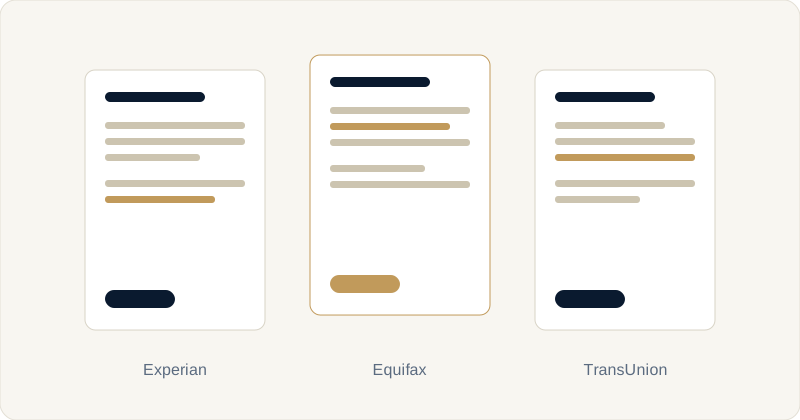
A credit score isn't a fixed grade — it's a calculation run against whatever your credit file contains at that moment. Lenders and card issuers report to the bureaus on their own schedules, usually once a month, and those updates don't arrive on the same day. When new information lands overnight, the next score calculated reflects it. That's also why your number can differ between Experian, Equifax, and TransUnion: reports and scores are different things, not every lender reports to all three bureaus, and different scoring models weigh the same file differently.
Common reasons a score drops overnight
A new balance was reported. Card issuers typically report your statement balance. A month of normal spending — a vacation, holiday shopping, a large repair on the card — shows up as higher credit utilization, even if you pay the bill in full. This is the single most common overnight mover.
A hard inquiry posted. Applying for a card, auto loan, or mortgage generates a hard inquiry when the lender pulls your file. The effect is usually modest, but it can appear suddenly — and several unrelated applications close together weigh more than any single one, a pattern explained in how many hard inquiries is too many.
An account was closed. Closing a card — by you or by the issuer for inactivity — can raise your overall utilization and, over time, affect the age and mix of your accounts.
A late payment was reported. Payments reported 30 or more days past due are among the heavier factors, and they arrive with the lender's monthly update — which is to say, overnight. And the universe of reporters is growing: a missed pay-in-4 installment that once stayed invisible can now surface too, as covered in does buy now, pay later affect your credit score.
A credit limit changed. If an issuer lowers a limit, your utilization rises with no change in spending.
A loan was paid off. Counterintuitively, closing your only installment loan can cause a dip by changing your credit mix. It's usually modest and it's still a good financial outcome.
A new account opened. A new card or loan lowers your average account age and adds an inquiry — small effects that show up at once.
A collection or public record appeared. Less common, heavier impact — and if you don't recognize it, treat it as an accuracy and identity question immediately.
Three real-world examples
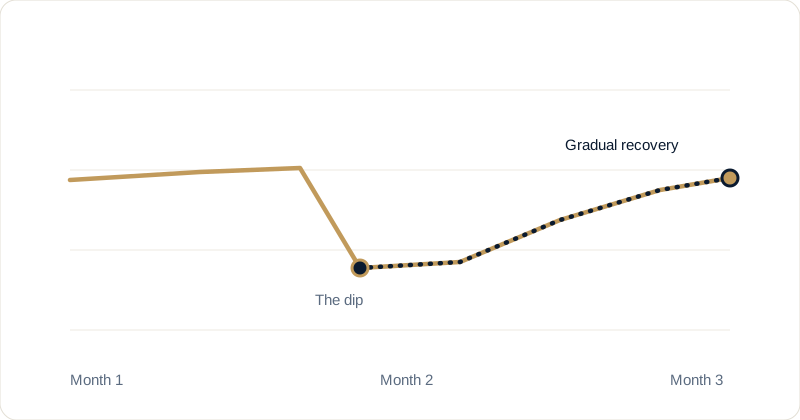
The holiday shopper. Maria puts $2,800 of December gifts on a card with a $4,000 limit and pays it in full in January. But her issuer reported the statement balance on December 28 — 70% utilization on that card — and her score dipped overnight. By the February report, with the balance back near zero, the dip had eased.
The car buyer. Devon applies for auto financing on a Saturday; the dealership's lender pulls his file. Monday morning his monitoring alert shows a new hard inquiry and a small dip — expected, explainable, and typically fading in importance over the following months.
The one that wasn't routine. Angela's score drops and her alert shows a new card account she never opened, with an address she's never lived at. That's not a scoring quirk — it's a signal to pull all three reports, dispute the account with the bureaus, and consider a fraud alert or security freeze.
Which drops usually ease naturally
Utilization-driven dips are the classic self-correcting case: report a lower balance next cycle and the calculation reflects it. The effect of a hard inquiry typically fades over time. The impact of a new account softens as the account ages. None of this is guaranteed — scoring models vary and every file is different — but these are the categories where patience plus normal habits usually do the work. What doesn't resolve on its own: reported late payments, collections, and anything inaccurate. Inaccuracies don't age out gracefully; they get fixed by disputing them with the bureaus, which is a free process every consumer can use directly.
When a drop may point to identity theft
Most overnight drops are routine. A minority are the first visible sign that someone else is using your information. The tells are less about the size of the drop and more about what's behind it: an account you didn't open, a hard inquiry from a lender you never contacted, an address or name variation you don't recognize, or a balance spike on a card you rarely use. If you find an account you never opened, follow the recovery steps in what to do if someone opens an account in your name. This is exactly where identity awareness earns its keep — the sooner unfamiliar activity is noticed, the simpler it usually is to address.
Steps to take right away
1. Identify the cause before reacting. Compare what's on your reports against what you expected. Most drops explain themselves in one line item.
2. Review all three bureau reports. Because lenders don't all report everywhere, the explanation may only be visible at one bureau. Federal law provides free reports through AnnualCreditReport.com, and ongoing access is part of monitoring memberships.
3. Dispute inaccuracies with the bureaus. If something is wrong — a payment marked late that wasn't, an account that isn't yours — each bureau has a free dispute process. Our guide on how to dispute an error on your credit report walks through it step by step.
4. If you suspect identity theft, act on it. A fraud alert or security freeze with the bureaus is free, and IdentityTheft.gov provides a federal recovery checklist.
5. Set up ongoing awareness. The reason overnight drops feel alarming is that they're usually discovered late. Credit monitoring with real-time alerts flags the change the day it posts — turning a mystery into a line item. If you're starting from zero, a free Credit Snapshot is an educational first look at where you stand.