
Published July 7, 2026 · Educational information — not legal, tax, lending, or financial advice.
Part of the Home Buying & Credit Resource Center.
Quick answer
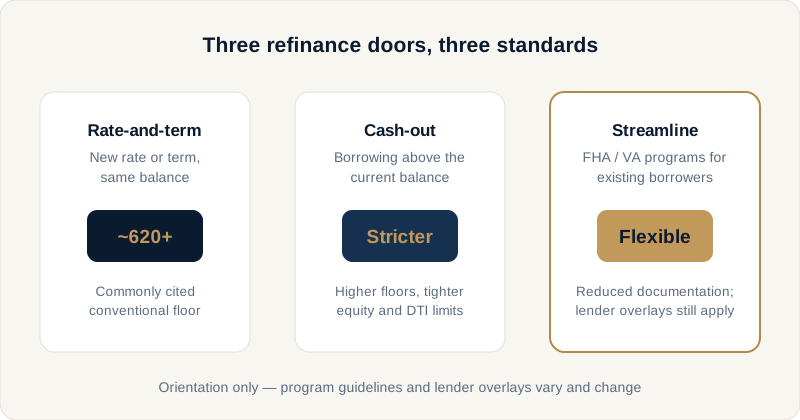
There’s no single number, because a refinance is a brand-new loan and standards vary by refinance type and lender. Commonly cited orientation: conventional rate-and-term refinances often reference floors around 620; cash-out refinances typically run stricter, with higher floors and tighter equity and debt-to-income limits, because the lender is extending more money against the same house; and FHA and VA streamline programs for existing borrowers can be considerably more flexible, with reduced documentation — though lender overlays sit on top of everything. Two things matter as much as the floor: your score gets checked fresh (the number that got you the original mortgage doesn’t carry over), and your new tier prices the new loan — which is the whole point, since most refinances only make sense if the savings beat the closing costs before you move.
A refinance is a new loan, reviewed fresh
The most common refinance misconception is that your existing mortgage earns you a pass on the credit review — you’re already their customer, the house is already collateral, surely the paperwork is lighter. It isn’t, because a refinance doesn’t modify your old loan; it replaces it with a new one, and the new one gets underwritten like any mortgage: a hard tri-merge pull of all three bureau reports, qualification typically on the middle score, and a full read of the file — the same process walked through in what happens during a mortgage credit check.
The score that qualified you years ago is history; the file as it stands today sets the terms. That cuts both ways: credit that’s deteriorated since purchase can price you out of the savings you’re chasing, and credit that’s improved can unlock a tier your original loan never saw.
Guidelines by refinance type
Rate-and-term — the classic refinance: a new rate, a new term, roughly the same balance. Conventional versions commonly reference floors around 620, with the same strong tier-pricing as purchase loans — approval at the floor and approval three tiers up are very different loans. Cash-out — borrowing above your current balance and taking the difference. Because the lender’s exposure against the same house grows, these typically carry higher score floors, tighter equity and debt-to-income limits, and often higher pricing.
Streamline programs — FHA and VA offer simplified refinances for borrowers already in those programs, built around a simple bet: you’re already paying this mortgage on time, so the review can be lighter. Documentation is reduced and credit standards can be notably more flexible — but lender overlays still apply, so “streamline” never means “automatic.” The purchase-side equivalents of these floors are covered in what credit score do you need to buy a house.
What lenders weigh beyond the score
Refinance underwriting reads a whole file, and two items carry special weight here. The first is your payment history on the current mortgage — the single most relevant evidence available, since it’s the exact obligation being replaced. A recent late mortgage payment hurts a refinance more than almost anything else on the file; a spotless multi-year run helps more than the score alone suggests.
The second is equity: your loan-to-value ratio, which works alongside credit — strong equity can soften a modest score with some lenders, and thin equity tightens everything, especially for cash-out. Beyond those, the familiar cast: debt-to-income, income stability, and the reports themselves, read line by line. Errors matter as much here as at purchase — a wrong late payment or misreported balance on one bureau can drag the middle score — so the pre-application review and dispute process apply in full.
The break-even math your tier feeds
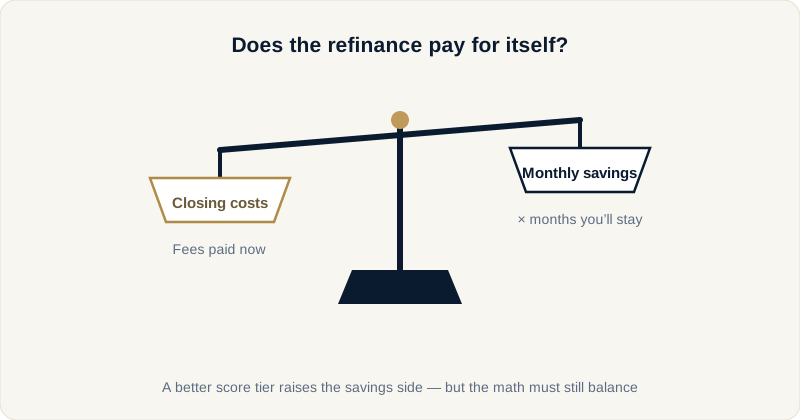
A refinance is a purchase: you pay closing costs now to buy a lower payment later, and the deal only works if you keep the loan long enough for the savings to repay the costs. That break-even point is where your credit tier quietly does its work — the tier sets the rate, the rate sets the monthly savings, and the monthly savings set how fast the closing costs come back.
A borrower two tiers higher doesn’t just save more per month; they cross break-even sooner, which makes the whole refinance viable across a wider range of plans. This is also why refinancing with deteriorated credit so often disappoints: the mediocre tier shrinks the monthly savings until the break-even point drifts past the day you’d realistically sell or refinance again. The tier mechanics — and the levers that move them — are unpacked in how your credit score affects mortgage interest rates.
If your score changed since you bought
If it improved — you may be sitting on the best case for refinancing that exists: same house, same income, better tier, cheaper money. Buyers who purchased with FHA loans at modest scores and have since built strong files are the textbook example, sometimes refinancing into conventional loans that also shed mortgage insurance costs. If it dropped — find out why before applying, not after. Pull all three reports and look for the culprit: high utilization (fast to fix), an error (disputable), or genuine derogatory marks (which mostly need time).
A hard pull that ends in a decline or an unusable rate costs an inquiry and teaches you what a free self-check would have — checking first is a soft inquiry that costs nothing. And a refinance does carry a modest, temporary score cost of its own: a hard inquiry, the old mortgage closing, a new unproven account — effects that typically ease with on-time payments, and never a reason to skip a refinance whose math works.
Improve first, or refinance now?
The purchase version of this question weighs waiting against home prices; the refinance version weighs waiting against rates. If you’re a few points below a tier boundary with fast levers available — card balances to pay down across a cycle or two, an error to dispute — a short delay can permanently improve the loan you lock.
If the gap is wide and the levers are slow, waiting mostly costs you months of the savings you already qualify for, and rates may not cooperate. There’s no universal answer; there is a universal first step, which is knowing your middle score and asking a loan officer where it sits against their tiers. Rate-shop in a short, focused window when you do apply — scoring models generally treat clustered mortgage inquiries as one event, per soft inquiry vs. hard inquiry.
Two real-world examples
The graduation refinance. Elena bought four years ago with an FHA loan and a thin file. Since then: perfect mortgage payments, aged accounts, low balances. Her middle score now sits several tiers above her purchase-day number, and a conventional refinance both drops her rate and removes her FHA mortgage insurance — two savings streams from one improved file. Her break-even arrives in months, not years.
The premature application. Marcus applies to refinance without checking his reports first. The pull reveals a card reporting near its limit and a disputed-but-unresolved collection on one bureau — his middle score lands a tier below expectations, and the offer barely beats his current rate. He withdraws, pays the card down, finishes the dispute, and reapplies two cycles later at the tier he should have started from. The only cost of checking first would have been nothing.
Key takeaways
- A refinance is a new loan, reviewed fresh — a hard tri-merge pull, the middle score, and today’s file, not the one that got you the original mortgage.
- Orientation floors: rate-and-term conventional around 620, cash-out stricter, FHA/VA streamlines more flexible — with lender overlays on top of all three.
- Your current mortgage’s payment history and your equity carry special weight — a recent late mortgage payment hurts a refi more than almost anything.
- The tier sets the rate, the rate sets the savings, and the savings set the break-even — a better tier makes the whole refinance viable sooner.
- Check all three files before you apply, not after — a self-check is free, and a mispriced application isn’t.