
Published July 5, 2026 · Educational information — not legal, tax, lending, or financial advice.
Quick answer
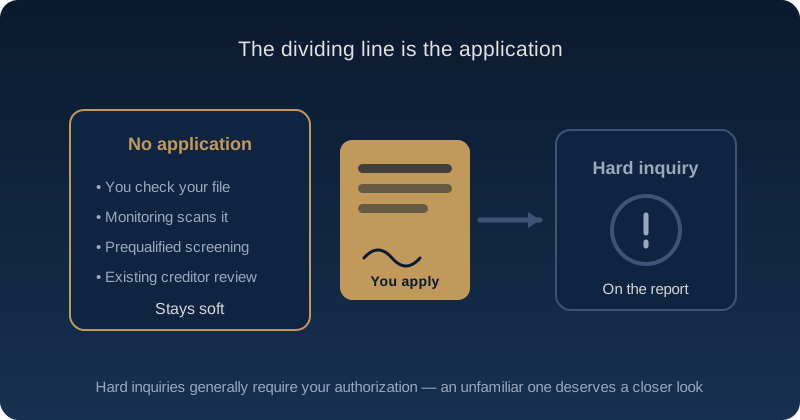
A soft inquiry is a look at your credit file that isn’t tied to a credit application — you reviewing your own report, a monitoring service scanning for changes, a company screening you for a prequalified offer. Soft inquiries generally aren’t visible to lenders and don’t affect scores. A hard inquiry happens when a lender pulls your file because you applied for credit; it appears on your report, is visible to other lenders, and can have a modest, temporary scoring effect that typically eases within months. The dividing line is your application — and because hard inquiries generally require your authorization, one you don’t recognize is worth investigating.
The dividing line: your application
Every look at your credit file gets logged as an inquiry, but the bureaus and scoring models sort those looks into two buckets, and the sorting rule is simpler than most explanations make it: did you apply for credit? If no one is making a lending decision on a new application, the look stays soft. The moment you sign or submit an application — for a card, an auto loan, a mortgage, a personal loan — the lender’s pull becomes hard.
Everything else that distinguishes the two types — visibility to lenders, scoring treatment, how long the entry matters — flows from that single distinction. It’s also why the two types feel so different in practice: soft inquiries happen constantly in the background of modern financial life, while hard inquiries are discrete events you should always be able to trace back to something you did.
What counts as a soft inquiry?
Soft inquiries cover the routine, non-application looks: pulling your own reports, viewing a score in a banking or monitoring app, ongoing credit monitoring watching your file for changes, prequalification and preapproval screenings for offers you didn’t request, account reviews by creditors you already have a relationship with, and certain insurance or employment screenings. They can pile up in any quantity without consequence — scoring models simply don’t read them. That’s a deliberate design choice, not an oversight: reviewing your own information is treated as responsible behavior, and the persistent myth that self-checks cost points gets a full debunking in does checking my own credit hurt my score.
What counts as a hard inquiry?
Hard inquiries follow credit applications you initiate and authorize. They appear on the credit report at the bureau the lender pulled from — which, since lenders don’t always pull all three, is one reason your bureau files can differ, a topic covered in why your three credit scores are different.
Their scoring role is real but small: new inquiries sit at the light end of the five factors, well behind payment history and utilization — the full hierarchy is laid out in what makes up your credit score. Any modest effect typically eases within months, and the entry generally ages off the report in about two years. Rate shopping gets special handling: multiple pulls for the same loan type within a compact window are generally treated as a single event for scoring purposes, because comparing offers is exactly what careful borrowers do — and if it’s the running total that worries you, the pattern-over-count answer is in how many hard inquiries is too many.
Who can see which inquiries?
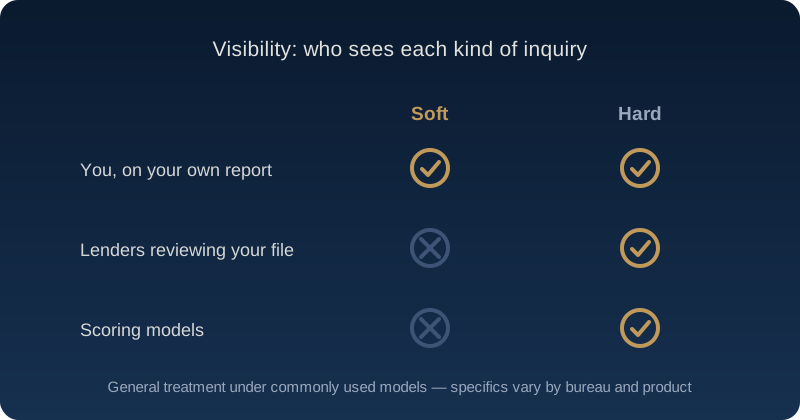
The visibility difference matters as much as the scoring difference. Soft inquiries show up when you read your own report — a full accounting of who’s been looking — but they generally aren’t displayed to lenders reviewing your file and play no role in their decisions. Hard inquiries are visible to everyone: you, scoring models, and other lenders, who may read a cluster of recent unrelated applications as a signal worth asking about. The practical upshot is that your own report always contains more inquiry entries than any lender ever sees, so a long soft-inquiry list is nothing to be concerned by — it’s mostly a log of your own diligence and the routine screening economy working in the background.
Gray areas worth knowing
A few situations don’t sort neatly, and knowing them prevents surprises. Apartment applications, utility setups, and phone-financing arrangements vary by company — some use soft pulls, others hard — so it’s reasonable to ask which type will be run before authorizing a check. Prequalified offers are soft at the screening stage, but accepting one and formally applying generally triggers a hard pull; the prequalification was an invitation, not an approval. Buy now, pay later sits here too: most pay-in-4 approvals use a soft check, while longer-term BNPL financing can involve a hard pull — the full picture, including the reporting shift now under way, is in does buy now, pay later affect your credit score. And requesting a credit limit increase on an existing card can go either way depending on the issuer’s practice. None of these are reasons to avoid the underlying transaction — they’re just moments where one question (“is this a soft or hard pull?”) buys you an accurate picture of what will land on your report.
Inquiries you don’t recognize
Because hard inquiries generally require your authorization, every one on your report should trace back to something you did. When one doesn’t, work through the innocent explanations first: companies often pull credit under corporate names that don’t match their storefront brand, and financing arranged at a dealership or retailer may generate pulls from lenders you never spoke to directly. If the entry still doesn’t match anything you initiated, you can dispute it with the bureau reporting it — the step-by-step removal process is in how to remove unauthorized hard inquiries from your credit report — and it’s worth reviewing the rest of your reports for other unfamiliar activity, since an unauthorized application in your name is one of the warning signs covered in the identity-review section of why credit scores drop overnight. Catching that early is precisely what regular report reviews are for.
Two real-world examples
The offer in the mailbox. Nia receives a “you’re prequalified” card offer she never asked for. Checking her report, she finds the soft inquiry from the issuer’s screening — no score effect, invisible to lenders. She decides the card fits her needs and applies; that application generates a hard inquiry. Same company, same card, two different inquiry types — separated by the moment she applied. The screening cost her nothing; the application was a normal, modest, temporary entry.
The dealership mystery. Reviewing his report after buying a car, Omar finds three hard inquiries from lender names he’s never heard of — alarming, until he remembers the dealership shopped his financing application to its lender network, all within the same week. Pulled for the same loan type in a compact window, the inquiries are generally grouped as one event for scoring purposes. Had one of those names appeared six months later with no application behind it, the same entry would have deserved a dispute and a full report review instead of a shrug.
Key takeaways
- The dividing line is your application — looking stays soft, applying goes hard.
- Soft inquiries don’t affect scores and generally aren’t visible to lenders — check as often as you like.
- Hard inquiries carry a modest, temporary effect and generally age off the report in about two years.
- In gray areas — apartments, utilities, limit increases — just ask which type of pull will be run.
- Every hard inquiry should trace to something you did — an unfamiliar one deserves investigation, not panic.