
Published July 17, 2026 · Educational information — not legal, tax, lending, or financial advice.
Quick answer
Before deciding, validate the debt — confirm it’s yours and the amount is right. Then weigh the trade-offs. Paying can stop added interest and lawsuit risk, helps your standing under newer scoring models, and usually removes a medical collection entirely. But paying a non-medical collection generally doesn’t delete it — the entry updates to “paid” and ages off on its original schedule — and under older models still used by some lenders, a paid collection may barely move the score. One real caution: in some states, a payment can restart the statute of limitations on a very old debt, so check your state’s rules first. Paying tends to make the most sense when the debt is valid, when a lender will review your file soon, or when it’s medical.
Validate before you decide
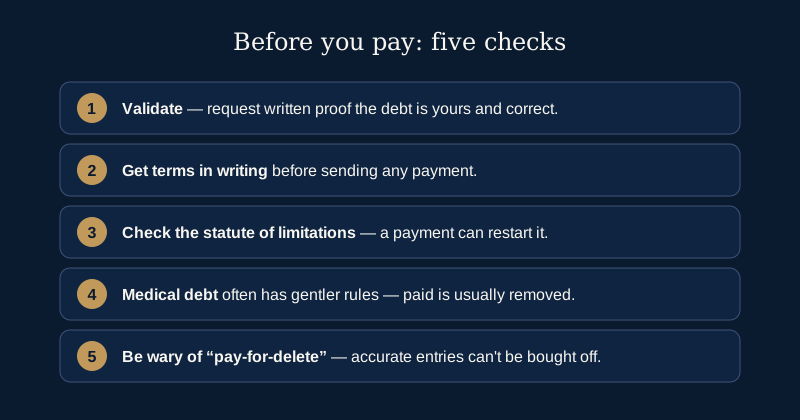
The first move isn’t paying — it’s confirming. You generally have the right to request validation from a collector: documentation that the debt is genuinely yours and that the amount is correct. Collection files change hands and accumulate errors, so wrong amounts, wrong dates, duplicate entries, and accounts that aren’t yours are all common. If the entry is inaccurate, you dispute it rather than pay it — the process is in how to dispute an error on your credit report. If you’re still sorting out how the debt got here in the first place, what happens when a debt goes to collections walks through the handoff.
What paying actually changes
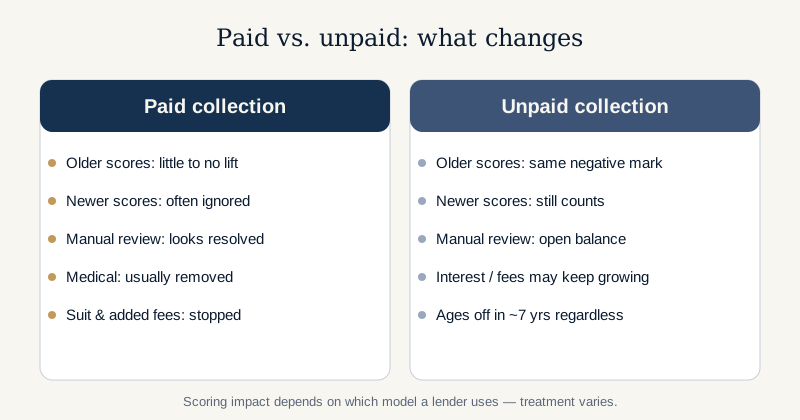
Set honest expectations: paying a non-medical collection generally does not remove it. The entry’s status updates to “paid,” and it continues aging off on its original schedule — about seven years from the original delinquency, a timeline detailed in how long do collections stay on your credit report. That doesn’t make paying pointless. A paid collection stops interest and fees from growing, ends any lawsuit risk on that debt, and reads better to an underwriter reviewing your file by hand than an open, unpaid balance does — a reminder that the report behind the number is what actually gets read, as unpacked in credit report vs. credit score.
Older vs. newer scoring models
Why can’t anyone promise a score jump? Because lenders don’t all use the same math. Newer models — recent FICO and VantageScore versions — ignore paid collections or weigh them far less, so paying can genuinely help under them. Older models still in use by some lenders treat paid and unpaid collections much the same, meaning a paid entry may barely move that particular score. So the payoff depends on which model the lender reviewing you happens to run. That variability is exactly why nobody — including us — can guarantee a specific point change, and why the surrounding factors in what makes up your credit score matter as much as any single entry.
The medical-debt exception
Medical collections play by gentler rules under bureau policies as commonly implemented: paid medical collections are generally removed from reports entirely, medical collections under roughly $500 are generally not reported at all, and unpaid medical debt faces a waiting period before it can appear. That flips the usual calculus — here, paying a legitimate medical collection can actually clear it from your file rather than merely marking it paid. Because regulatory treatment of medical debt has been changing, it’s worth verifying the current policy at the moment you act.
The statute-of-limitations trap
This is the one caution that can quietly cost people. The credit reporting window and the legal statute of limitations are two separate clocks. Paying never restarts the reporting window — that stays anchored to the original delinquency. But in some states, making a payment or acknowledging a very old debt in writing can restart the statute of limitations, the clock that governs how long a collector can successfully sue you. A debt that was legally time-barred can, with one partial payment, become collectible in court again. That’s why understanding your state’s rules before paying on an old debt is genuinely important, and why a specific old-debt question is worth taking to a consumer-law resource rather than settling by folklore.
Pay-for-delete and settlement, honestly
Two ideas deserve plain talk. Settlement — paying less than the full balance to resolve the account — is common, but a settled collection is typically marked “settled” or “paid for less than full balance,” which underwriters can see; get any settlement in writing before sending money. Pay-for-delete — a collector agreeing to remove the entry in exchange for payment — is not guaranteed, may conflict with the collector’s reporting agreements, and should raise a flag whenever someone promises to erase an accurate entry for a fee. Accurate entries generally can’t be deleted on demand; inaccurate ones don’t require paying anyone to dispute. The one honest ask that exists for an accurate entry — a discretionary courtesy request to the original creditor — is covered in how to write a goodwill letter.
When paying matters most
Paying tends to be the clear move when the debt is valid and a lender will soon review your file — a mortgage being the classic case, where resolved collections read better and some programs expect them addressed. Can you get a mortgage with a collection on your credit report covers how loan programs handle this. Paying also makes sense when interest or fees are still growing, when a lawsuit is threatened on a debt within the statute of limitations, or when it’s medical debt that will be removed once paid. If the collection is one piece of a larger setback, fit this decision into the broader plan in how to rebuild your credit after financial hardship.
Key takeaways
- Validate the debt first — dispute inaccurate entries instead of paying them.
- Paying a non-medical collection usually marks it “paid” rather than deleting it; it still ages off in ~7 years.
- Newer scoring models reward paid collections; older ones may not — so no point gain is guaranteed.
- Medical is the exception: a paid medical collection is generally removed entirely.
- Check your state’s statute of limitations before paying an old debt — a payment can restart the legal clock.