
Published July 15, 2026 · Educational information — not legal, tax, lending, or financial advice.
Quick answer
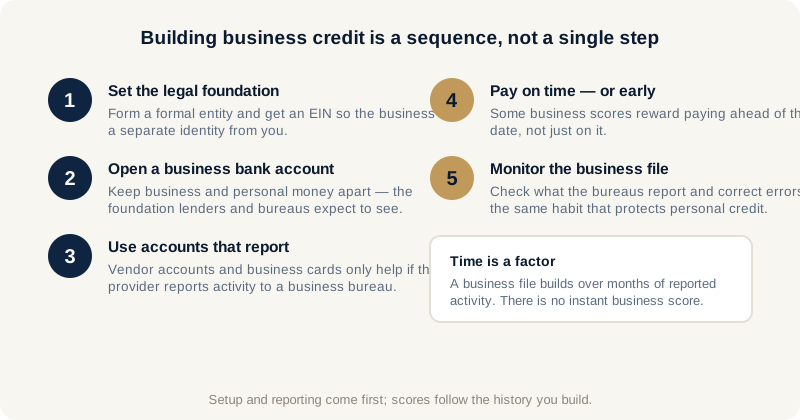
Building business credit means establishing your business as a separate financial identity and then giving it a track record. In practice that follows a sequence: set up a formal entity and get an EIN, open a business bank account, use accounts that report to the business credit bureaus, and pay them on time — or early. A business file forms over months of reported activity; there is no instant business score, and no responsible source guarantees a specific outcome. Early on, many accounts still lean on the owner’s personal credit, so it pays to know what your personal report says before you apply.
What business credit is (and isn’t)
Business credit is a record of how a business borrows and repays — kept in a file tied to the business itself rather than to you as an individual. When a supplier extends terms, or a lender reviews an application, they may check this file to gauge how reliably the business meets its obligations. It’s the business-world counterpart to a personal credit history.
What it isn’t is a copy of your personal credit, and it isn’t automatic. Opening a business doesn’t create a business credit file the way turning 18 eventually leads to a personal one. The file only begins to exist once accounts that report to the business bureaus start sending in activity. If the difference between the two files is new to you, Personal Credit vs. Business Credit breaks it down in detail, and the pillar guide What Is Business Funding in New Jersey? maps where business credit fits in the wider funding picture.
Why building it is worth the effort
A business credit file that shows a steady history can matter in several ordinary situations. Suppliers may offer better payment terms. Some lenders weigh it alongside revenue and cash flow when reviewing a funding application. And separating business obligations from your personal file can help keep the two from tangling together as the business grows.
It’s worth being honest about the limits, though. A strong business file does not guarantee approval, funding amounts, or particular terms — every lender applies its own criteria, and qualification always depends on lender review and eligibility. Business credit is one input among several, not a switch that unlocks capital. It earns its value gradually, as one more piece of evidence that the business is a dependable counterparty.
Step 1: Set up your business identity
Before a business can build its own credit, it needs to look like a distinct entity rather than an extension of you. This foundation is unglamorous but it’s where everything else rests.
Form a formal entity
An LLC or corporation gives the business a legal identity separate from its owner. A sole proprietorship can sometimes obtain business accounts, but the owner and the business are legally the same, which makes true separation difficult. Which structure fits depends on your goals, taxes, and liability — a question worth taking to a qualified accountant or attorney rather than guessing.
Get an EIN
An Employer Identification Number is issued by the IRS at no cost and functions as the business’s tax ID — roughly the business equivalent of a Social Security number. Many business accounts and bureau files are keyed to it. Establishing the business on its EIN, rather than defaulting to your SSN, is part of keeping the two identities distinct.
Open a business bank account and keep records clean
A dedicated business bank account is foundational. It keeps business and personal money apart, produces the financial records lenders expect to see, and reinforces that the business is its own entity. Consistent business details — the same legal name, address, and phone across accounts and registrations — also help, since mismatched records can fragment a business file.
Step 2: Use accounts that actually report
Here is the point that trips up the most people: an account only builds business credit if the provider reports that activity to a business credit bureau. Plenty of vendors and cards never report at all, which means you can pay them perfectly for years and see nothing appear in your business file.
So the practical move isn’t just to open accounts — it’s to open accounts that report, and to confirm that before assuming they’ll help. A few common building blocks:
Vendor or trade accounts
Some suppliers extend short payment terms (pay within, say, 30 days) and report how you handle them. A handful of reporting vendor accounts, used and paid responsibly, is a common way early history accumulates.
Business credit cards
A business card can contribute history — but read the terms. Many carry a personal guarantee, and some report only to personal bureaus, or only to business bureaus, or to both. Knowing where an account reports tells you what it’s actually building.
Small business loans or lines of credit
As the business matures, financing that reports can add to the file. If you’re weighing revolving versus fixed structures, Business Line of Credit vs. Term Loan compares the two, and How a Business Line of Credit Works covers the revolving option in depth. Whatever the product, the credit-building value depends on whether it reports.
Where business credit is tracked
Business credit isn’t kept in one central place. Several bureaus each maintain their own files using their own models, which is why a record that shows up on one may not appear on another.
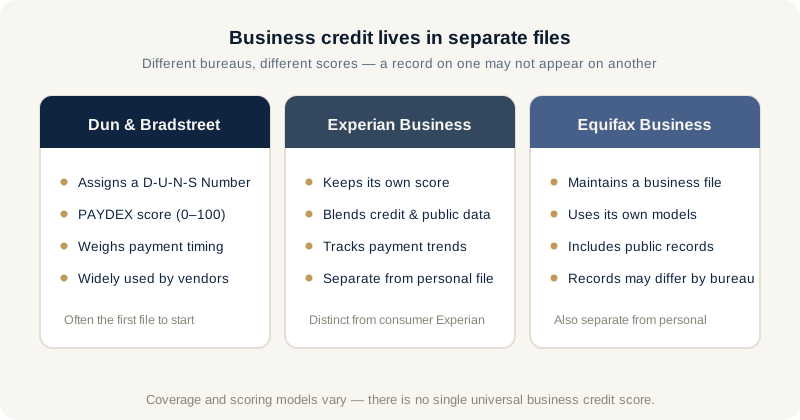
Dun & Bradstreet assigns a D-U-N-S Number and is known for its PAYDEX score, which leans heavily on payment timing. Experian Business and Equifax Business each keep their own separate business files and scores, distinct from their consumer divisions. Because coverage varies, a strong record with one bureau doesn’t automatically mean a strong record everywhere. This mirrors the consumer world, where scores differ across bureaus — a dynamic explored in Why Are My Three Credit Scores Different?
The habits that build a strong file
Once the foundation is set and reporting accounts are open, business credit is built the same unglamorous way personal credit is: through consistent, boring reliability.
Pay on time — and consider paying early
Payment history is central. A useful quirk of some business scoring models, unlike most personal ones, is that paying ahead of the due date can help rather than merely paying on it. At minimum, late payments work against you, so building around comfortable, on-time obligations matters.
Keep balances sensible
Carrying accounts near their limits can weigh on how a business looks, much as high credit utilization affects a consumer profile. Leaving room on revolving accounts is a habit that tends to age well.
Let history accumulate
Time is a real ingredient. A file with several months or years of reported, on-time activity simply tells a fuller story than a brand-new one. There’s no shortcut that manufactures history you haven’t lived.
Monitor what the bureaus report
Business files can contain errors just as personal ones do. Checking periodically — and correcting mistakes — protects the record you’re working to build. Preparing for funding conversations more broadly is covered in How to Prepare Your Business Before Applying for Funding in New Jersey.
Common mistakes to avoid
A few missteps quietly undo good intentions:
Assuming every account reports
Paying a non-reporting vendor flawlessly builds nothing in your business file. Confirm reporting before counting on an account to help.
Blending personal and business finances
Running business expenses through a personal card or account muddies both files and undercuts the separation you’re trying to create.
Chasing “guaranteed” shortcuts
Offers promising an instant business score, or funding regardless of history, deserve real skepticism. As with personal credit, there is no legitimate way to fast-forward a track record you haven’t built.
Ignoring personal credit
Because the owner’s personal credit so often enters early business applications, neglecting it can stall progress. Reading How to Read Your Credit Report is a practical way to know what a lender will see, and What Credit Score Do You Need for Business Funding in New Jersey? explains how the two files interact when you apply.
Key takeaways
- Business credit is built, not automatic — it starts once reporting accounts show activity in a business file.
- The foundation comes first: a formal entity, an EIN, a business bank account, and consistent business details.
- Only accounts that report to a business bureau build the file — confirm reporting before relying on one.
- Dun & Bradstreet, Experian Business, and Equifax Business each keep separate files; there’s no single universal score.
- On-time (sometimes early) payments and time build the file — no legitimate shortcut manufactures history.
- Personal credit often factors into early applications — know what’s on your report before you apply.