
Published July 5, 2026 · Educational information — not legal, tax, lending, or financial advice.
Quick answer
A charge-off is the lender’s accounting step of writing a seriously delinquent debt off its books as a loss — typically after about 180 days of nonpayment on credit cards, or around 120 days on many installment loans. Despite the final-sounding name, nothing about your obligation changes: the debt is still owed, collection can continue, and within state law limits you can still be sued. On your report, the entry generally remains about seven years from the original delinquency, and paying it updates the status (“paid charge-off”) without erasing the entry. Understanding the term correctly is the difference between a plan and a false sense of closure.
So what does “charge-off” actually mean?
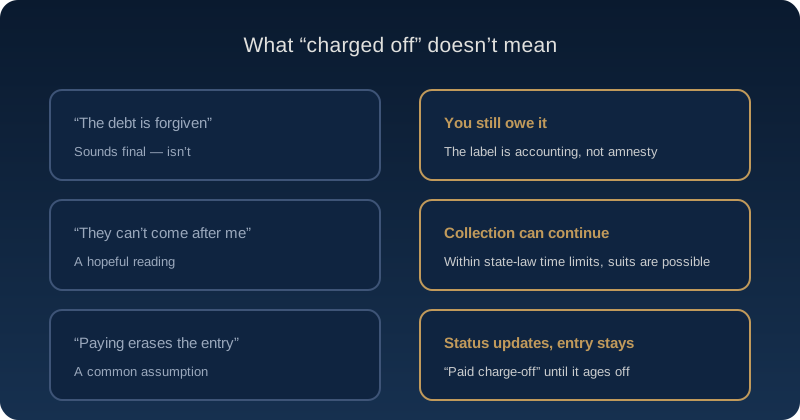
The name comes from the lender’s side of the ledger, which is exactly why it confuses everyone on the borrower’s side. When an account goes long enough without payment, accounting standards and regulatory guidance generally require the lender to stop carrying it as an asset it expects to collect and reclassify it as a loss — to “charge it off.” That’s the entire event: a bookkeeping reclassification inside the lender’s financial statements. It says something real about how the lender now views the account’s collectability, and it lands as a serious negative on your credit report — but it is not a forgiveness, a cancellation, a settlement, or a truce. The word describes what happened to the lender’s books, not to your debt.
How does an account end up charged off?
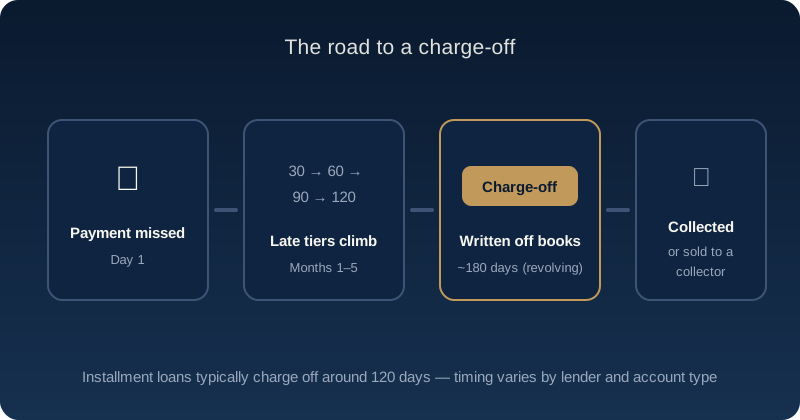
Charge-offs sit at the end of the delinquency road, not the beginning. The typical sequence: a missed payment starts the clock; the account climbs the late tiers — 30, 60, 90, 120+ days past due — with each tier reported and each generally read as more serious (that front half of the story is mapped in how long do late payments stay on your credit report); and if the account is still unpaid at roughly 180 days for revolving accounts like cards, or around 120 days for many installment loans, the lender charges it off.
The timing matters in a practical way: the months between the first miss and the charge-off are the window where bringing the account current — or negotiating a hardship arrangement with the lender — can stop the escalation before the most serious label lands.
Why you still owe the debt
Here’s where the misconception costs people: the charge-off changes the lender’s accounting, and nothing else. The balance remains legally owed. The original creditor may keep collecting internally, hand the account to a collection agency, or sell it outright — the mechanics of that handoff are in what happens when a debt goes to collections — and interest and fees can continue accruing depending on the account terms. Within your state’s statute of limitations, a lawsuit over the balance remains possible. That legal clock is a separate matter from credit reporting, varies by state and debt type, and can in some states be affected by actions like making a partial payment — which is why, before engaging with an old charged-off debt, understanding your state’s rules (or consulting a consumer-law resource) is genuinely worth the effort. Treating “charged off” as “over” is how people get surprised years later.
What it looks like on your report
On your credit report, the account’s status updates to “charge-off” (or “charged off as bad debt”), and the entry generally remains for about seven years from the original delinquency — the first missed payment in the chain, not the charge-off date itself. That anchor never restarts, no matter who later owns the debt. As with other serious negatives, the entry’s scoring influence tends to fade before it physically ages off, particularly as newer on-time history accumulates — payment history being the heaviest factor in the mix laid out in what makes up your credit score. Worth checking whenever you review the entry: that the delinquency date is accurate (a newer date illegitimately extends the window and is disputable) and that the balance shown matches reality.
Charge-off vs. collection: what’s the difference?
The two terms travel together and get conflated constantly, so here’s the clean split: the charge-off is the original creditor’s accounting write-off of its own account; the collection is what typically follows — the debt being pursued by a collection agency, which may report its own separate tradeline. One unpaid debt can therefore legitimately appear twice on a report: once as the charged-off original account, once as the collection. That’s two chapters of one story, not double-counting — though the balance should generally only be actively owed in one place, and a report showing the same dollars as collectible by two parties simultaneously is worth disputing. The collection side of the story, including the never-restarting clock and medical debt’s gentler rules, is covered in how long do collections stay on your credit report.
What happens if you pay or settle?
Calibrated expectations, without the sales pitch: paying a charged-off debt in full updates the status to “paid charge-off”; settling for less typically shows “settled” or “paid for less than full balance.” Neither removes the entry — it ages off on its original schedule — and be skeptical of anyone promising deletion of an accurate charge-off for a fee.
What resolution does buy: collection activity on the balance ends, interest stops growing, lawsuit risk on that debt goes away, and underwriters reading your file later see a resolved obligation instead of an open one with a climbing balance — a distinction that matters, since for significant decisions lenders read the report itself, as unpacked in credit report vs. credit score. Whether to pay, settle, or wait depends on the amount, the debt’s age against your state’s legal clock, and your goals — a genuinely situational call.
Two real-world examples
The letter that read like closure. After six months of unemployment, Yusuf’s card account charges off, and the statement language — “charged off as bad debt” — reads to him like the bank gave up. He stops thinking about it. Two years later, employed and rebuilding, he gets a settlement offer from a debt buyer he’s never heard of: the debt was sold, has been accruing, and is still within his state’s statute of limitations. Nothing improper happened — he just mistook an accounting label for a resolution. He verifies the debt through validation, checks the original delinquency date on his reports, and negotiates a settlement he can document in writing.
The interrupted slide. Renee misses three payments during a medical leave — her account is 90 days past due and heading for charge-off. Instead of waiting, she calls the issuer, explains the situation, and lands a hardship plan that brings the account current over four months. The 30/60/90 lates remain on her report and will age off in time, but the slide stops there: no 120-day tier, no charge-off, no collection, no sold debt. The months before the label are exactly the window where a phone call still changes the ending.
Key takeaways
- A charge-off is the lender’s accounting write-off — typically ~180 days for cards, ~120 for many loans.
- The debt is still owed — collection continues, and lawsuits remain possible within state time limits.
- The entry reports about seven years from the original delinquency — a clock that never restarts.
- Paying or settling updates the status and stops the bleeding — it doesn’t erase the entry.
- The months before charge-off are the intervention window — a hardship call can still change the ending.