
Published July 19, 2026 · Educational information — not legal, tax, lending, or financial advice.
Quick answer
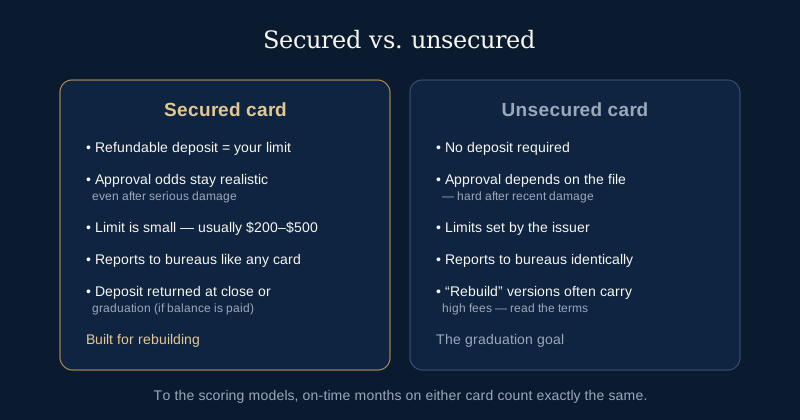
A secured credit card takes a refundable deposit — commonly $200–$500 — that becomes your credit limit, then reports your activity to the bureaus like any other card. That reporting is the whole point: to the scoring models, an on-time month on a secured card counts exactly the same as one on an unsecured card. Choose one with no annual fee, reporting to all three bureaus, and a real graduation path. Then treat it like a debit card: one small recurring charge, paid in full, every month — keeping utilization low, because on a $300 limit even a $150 balance reads as 50%. Do that for a stretch of months and many issuers will return the deposit and convert the card to unsecured, with the account’s history intact. No score outcome is guaranteed — but the mechanism is ordinary, boring, positive payment history, which is the heaviest input credit scoring has.
How a secured card actually works
The mechanics are simple once one misconception is cleared: the deposit is not prepayment. You place a refundable cash deposit with the issuer — typically a few hundred dollars — and that amount generally becomes your credit limit. From there the card behaves like any credit card: you spend, a statement arrives, and you pay it from your own funds. The deposit just sits as collateral, protecting the issuer if you default, which is exactly why issuers can say yes to applicants whose files would sink an unsecured application. Meanwhile the issuer reports the account to the credit bureaus each month, and that stream of reported on-time payments is the product you’re actually buying — payment history is the single heaviest factor in what makes up your credit score. The Consumer Financial Protection Bureau’s plain-English explainer on what a secured credit card is covers the same mechanics from the regulator’s side.
Secured vs. unsecured
The difference is who carries the risk, not how the account scores. An unsecured card extends credit on the strength of your file alone — which is precisely what a damaged file can’t support yet. A secured card moves the risk to your deposit, keeping approval odds realistic even after serious damage, including relatively soon after a bankruptcy discharge — the role it plays in that specific rebuild is covered in rebuilding your credit after bankruptcy. To the bureaus and the scoring models, though, the two are the same species: same reporting, same weight for an on-time month, same penalty for a missed one. One caution cuts the other way — some unsecured cards marketed for rebuilding carry heavy setup, monthly, and annual fees that can consume most of a small limit. A plain secured card with no annual fee almost always beats them.
How to choose one
Four criteria do nearly all the work. First, no annual fee — or a genuinely minimal one; a rebuild tool shouldn’t charge rent. Second, reporting to all three bureaus. This is the non-negotiable: a card that reports to only one or two bureaus builds history on some files and leaves the others thin, and since you can’t control which bureau a future lender pulls, full coverage matters. Third, a refundable deposit with clear return terms — read exactly when and how you get it back. Fourth, a real graduation path: some issuers routinely review secured accounts for conversion to unsecured; others never do, meaning your deposit stays parked until you close the account. Ask before you apply. And expect the application itself to typically involve a hard inquiry, like most card applications — a small, temporary factor explained in soft inquiry vs. hard inquiry.
Using it right: the debit-card rule
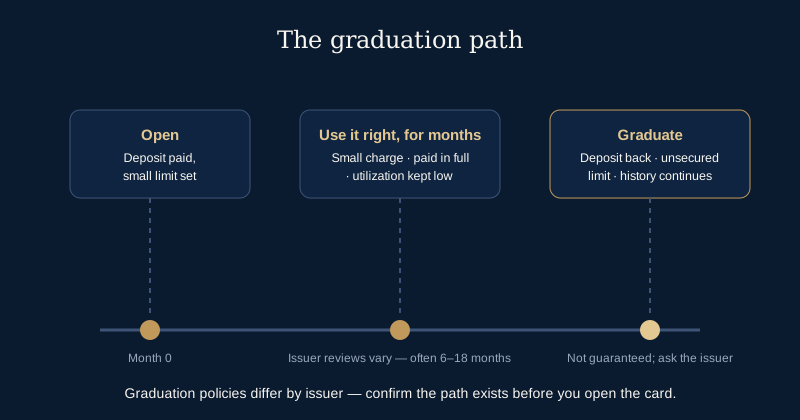
The winning usage pattern is almost embarrassingly simple: treat the secured card like a debit card you happen to pay monthly. Put one small recurring charge on it — a streaming subscription, a phone bill — set autopay to clear the statement balance in full, and then mostly leave it alone. This does three things at once. It generates an on-time payment every single month with zero willpower required. It keeps the reported balance tiny, which matters enormously on a small limit. And it avoids interest entirely, since a statement balance paid in full doesn’t accrue it. The rebuild is won by the streak — and streaks die to forgetfulness far more often than to hardship, which is why the autopay step isn’t optional advice, it’s the design.
The low-limit utilization trap
Here’s the mistake that quietly defeats the purpose. Utilization — reported balances divided by credit limits — is one of the heaviest scoring inputs, and small limits make the math unforgiving: $150 riding on a $300 limit is 50% utilization, a level scoring models read as strain even if you pay in full every month, because what typically reports is the statement balance. So a secured card used for everyday spending can generate perfect payments and high utilization simultaneously — one hand building while the other undoes. The fixes: keep the recurring charge small relative to the limit, pay down the balance before statement close if a bigger purchase lands on the card, or fund a larger deposit for a larger limit if the issuer allows it. The full mechanics of the ratio — per-card vs. overall, and the three levers — are in what is credit utilization.
Graduation: getting the deposit back
Graduation is the payoff: after a stretch of on-time payments — issuer policies vary, but reviews commonly happen somewhere in the six-to-eighteen-month range — an issuer may convert the account to unsecured, return your deposit, and often raise the limit. Critically, the account continues: its payment history and its age stay on your file, which is why graduating usually beats closing one card to open another. If your issuer doesn’t graduate accounts, the alternative once your file has strengthened is opening an unsecured card on its own merits and then deciding what to do with the secured card — keeping in mind that closing it returns your deposit but removes its limit from your available credit, the same denominator effect that catches people in the utilization math. Nothing about graduation is guaranteed, and no issuer is obligated to convert — which is exactly why the graduation policy belongs on your selection checklist up front.
Companions and alternatives
A secured card rarely needs to work alone. A credit-builder loan — where the borrowed funds sit locked while you make the payments, then release at the end — adds installment history alongside the card’s revolving history, and the mix itself is a modest scoring positive. Becoming an authorized user on a well-managed account owned by someone you trust can add aged, clean history to a thin file. And in some cases certain recurring payments can be reported through opt-in services — rent being the biggest of them, with the reporting paths and realistic expectations laid out in can rent payments help you build credit. What every legitimate tool shares is the same engine: fresh, on-time payment history accumulating month over month. Where each tool fits in the larger recovery arc — after collections, hardship, or worse — is mapped in the pillar guide, how to rebuild your credit after financial hardship, with realistic pacing expectations in how long does it take to rebuild your credit.
Key takeaways
- The refundable deposit becomes the limit and protects the issuer — it is not prepayment; you still pay the bill.
- Selection checklist: no annual fee, reports to all three bureaus, clear deposit-return terms, real graduation path.
- The debit-card rule: one small recurring charge, autopaid in full, every month.
- Watch the low-limit utilization trap — small limits turn everyday spending into high reported ratios.
- Graduation returns the deposit and keeps the account’s history — confirm the policy before you open the card.