
Published July 8, 2026 · Educational information — not legal, tax, lending, or financial advice.
Part of the Business Funding Center.
Quick answer
Often, yes. Lower credit narrows your options and tends to raise the cost of the funding available — but it doesn’t automatically close every door. Because credit is one factor among several, funding types that lean on revenue and cash flow rather than the score — some working-capital products, equipment financing secured by the equipment itself — may work with a wider range of credit profiles. Stronger, steadier revenue improves your position considerably.
Two honest caveats sit next to that encouragement. First, no funding is guaranteed; any offer of “guaranteed approval regardless of credit” is a red flag, not a lifeline. Second, options available with weaker credit usually cost more, so it’s worth comparing carefully. This article covers what “bad credit” really means, the paths that may still exist, how to strengthen your application, and how to build toward better options over time.
What “bad credit” really means
“Bad credit” is a label that sounds more absolute than it is. There’s no universal line where credit turns from “good” to “bad” — the phrase generally points to lower credit scores, usually reflecting some history a lender reads as higher risk: past missed payments, high balances relative to limits, collections, or similar marks. The ranges people commonly reference are laid out in what is a good credit score, but the more useful move is to look past the label and read what’s actually on your reports.
Here’s why that matters so much for funding: the same score that limits your choices at a traditional bank can be perfectly workable for a revenue-focused alternative lender. “Bad credit” isn’t one verdict applied everywhere — it’s a signal that different lenders and funding types weigh differently. Two businesses with the same score can face very different menus depending on their revenue, their cash flow, and the kind of funding they’re seeking. Understanding the specifics of your file — which starts with reading it — turns a vague, discouraging label into a set of concrete facts you can work with (the how-to is in how to read your credit report).
Funding options that may still exist
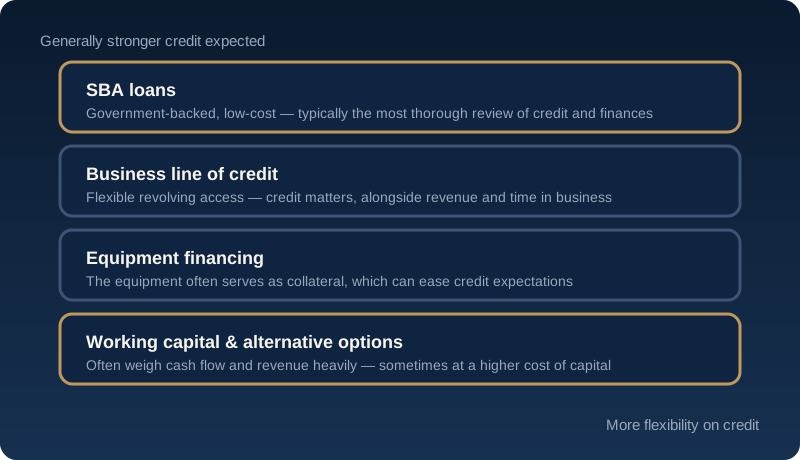
The most realistic paths with weaker credit share a common thread: they lean on something other than the score. Equipment financing is often near the top of the list, because the equipment being purchased typically serves as collateral — the lender’s risk is anchored to a tangible asset it could recover, which can open the door wider than an unsecured product would. Revenue-based and working-capital options frequently weigh consistent revenue and healthy cash flow heavily, sometimes accommodating lower credit in exchange for a higher cost of capital. Options that rely on business assets follow the same logic: reduce the lender’s exposure, and credit becomes less decisive.
What ties these together is the principle from the broader guide, what credit score do you need for business funding: the more secured or revenue-backed the funding, the more flexibility there tends to be on credit. It’s worth being clear-eyed, though — flexibility usually comes at a price. These options can carry higher rates or fees than what stronger credit would unlock, which makes comparing the total cost of capital, not just the approval, essential. The framework for comparing structures like these is in business line of credit vs. term loan, and availability and terms always depend on lender review and eligibility.
Personal vs. business credit here
When credit is a concern, the distinction between your two credit files becomes especially practical. Personal credit is tied to you as an individual; business credit is tied to your company through its EIN and built separately over time. For businesses without much of a track record, personal credit usually carries the greater weight — which is exactly why weak personal credit can affect business funding even for a company that’s doing well, particularly when a personal guarantee (your personal promise to repay if the business can’t) is part of the deal.
The encouraging flip side: building separate, healthy business credit over time can gradually reduce how much a lender leans on your personal score. It won’t rewrite your situation overnight — business credit is built slowly — but it’s a genuine lever for the medium and long term, and one many owners overlook. We’ll come back to how to start. If the personal-vs-business split is new to you, the fuller treatment lives in what credit score do you need for business funding.
What to know about alternative lenders
Beyond traditional banks, a range of alternative lenders and online funding providers often serve businesses that banks decline — and they can be a legitimate, useful part of the landscape. Many focus on revenue and cash flow, move faster than banks, and work with a broader set of credit profiles. That flexibility is real and valuable. It also comes with a responsibility to look closely, because the same market includes products that are far more expensive than they first appear.
So approach this end of the market as an informed buyer. Read the total cost, not just the payment or the rate as quoted — some products express cost in ways that obscure the true annualized price. Understand the repayment structure and how it fits your cash flow, since aggressive repayment schedules can strain a business even when the headline number looks manageable. Watch for fees, and be skeptical of pressure to decide immediately. Above all, treat any promise of guaranteed approval as a warning sign: responsible funding always depends on some form of review. Comparing more than one option before committing isn’t caution for its own sake — it’s how you avoid trading a credit problem for a cash-flow one.
Strengthening your application
With weaker credit, the parts of the picture you can strengthen carry extra importance — so put your energy there. On the business side: keep revenue and cash flow as steady and well-documented as possible, reduce existing debt where you’re able, separate business and personal finances cleanly, and prepare clear, organized financial records before anyone asks for them. For revenue-focused lenders, a strong, well-presented cash-flow story can do real work that the score alone can’t. The complete preparation sequence is in how to prepare your business before applying for funding.
On the credit side, the same fundamentals that help any file help here — and they’re within reach. Review your reports from all three bureaus and dispute any genuine errors, since a mistake dragging down your file helps no one (how to dispute an error on your credit report walks through it). Lower your credit card balances where you can, because utilization responds relatively quickly. Pay everything on time, without exception, from now forward. These steps won’t transform a file overnight, but improving your credit steadily over time widens the options and generally improves the terms available — the realistic arc is described in how long does it take to rebuild your credit.
Building business credit over time
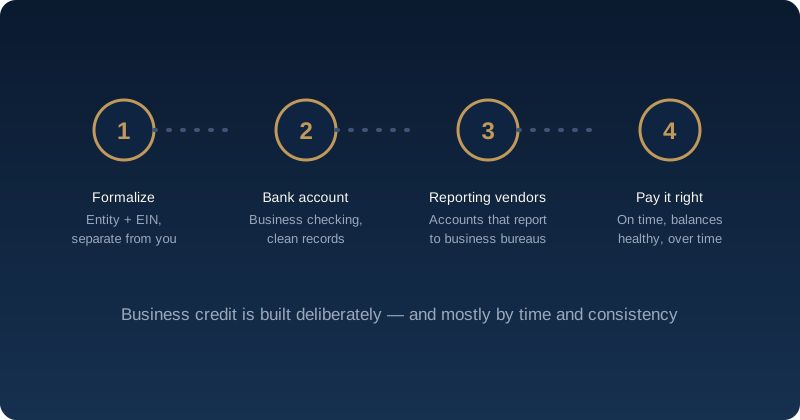
If reducing your reliance on personal credit is part of the goal, building the business’s own credit file is the long-game answer — and it’s more approachable than it sounds when broken into steps. Start by formalizing the business: establish it as its own legal entity and obtain an EIN, so the company is a distinct financial actor rather than an extension of you. Open a dedicated business bank account and route business income and expenses through it, which both cleans up your records and supports the separation lenders like to see.
From there, work with vendors and accounts that report to the business credit bureaus — not every account does, and only the reporting ones build the file. Then do the unglamorous, decisive part: pay on time, keep balances healthy, and let consistency accumulate. Business credit is built deliberately and mostly by time; there is no instant method, and any service promising to manufacture strong business credit overnight deserves real skepticism. Done patiently, this is how a business earns its way toward better options on its own strength.
Mistakes to avoid
Assuming bad credit means no options. It usually doesn’t — and giving up before looking means missing the revenue- and asset-based paths that might fit. Grabbing the first offer. With weaker credit, the first “yes” is often the most expensive; comparing the total cost of more than one option protects you. Ignoring the true cost of capital. A manageable-looking payment can hide a very high annualized cost or a repayment schedule that strains cash flow — read past the headline number.
Trusting guaranteed-approval promises. Responsible funding always involves review; “guaranteed regardless of credit” is a signal to slow down, not speed up. Applying scattershot to many lenders at once. A burst of applications can generate multiple hard inquiries and signal distress; targeted applications to lenders whose criteria fit your situation serve you better. And neglecting the fundamentals — the errors to dispute, the balances to lower, the records to organize — means leaving your strongest, cheapest improvements on the table.
Realistic expectations
The honest picture is neither “bad credit locks you out” nor “credit doesn’t matter.” With weaker credit, expect a narrower set of options, generally at a higher cost, with more of the decision resting on your revenue, cash flow, and any collateral you can offer. A business with lower credit but steady, healthy cash flow often has more real options than its owner assumes; a business with both weak credit and thin, erratic revenue faces a genuinely harder road — where the most productive first move may be strengthening the fundamentals before seeking funding at all.
Preparing for business funding isn’t about having perfect credit. It’s about understanding where your business stands, knowing what lenders typically review, and making informed decisions before you apply. The more prepared you are, the more confident you’ll feel when the time comes to seek funding — and imperfect credit is a starting point to work from, not a verdict to accept.
Key takeaways
- Bad credit narrows options and tends to raise cost — but often doesn’t close every door, especially for revenue- and asset-based funding.
- “Bad credit” has no universal cutoff; the same score can be limiting at a bank and workable with a revenue-focused lender.
- Personal credit often carries the most weight for businesses with limited history — building business credit reduces that reliance over time.
- With alternative lenders, read the total cost of capital and repayment structure closely — and treat guaranteed-approval promises as a red flag.
- Strengthen what you control: steady documented revenue, lower debt, separated finances, disputed errors, lower balances, on-time payments.