
Published July 15, 2026 · Educational information — not legal, tax, lending, or financial advice.
Quick answer
Working capital is what a business has available for its short-term needs: current assets (cash, receivables, inventory) minus current liabilities (bills, payroll, short-term debt due soon). Positive working capital means short-term resources cover short-term obligations — the cushion that keeps operations running. Gaps open up when money goes out before it comes in, and businesses bridge them in several ways: a line of credit, a short-term loan, invoice financing, or revenue-based financing. None is universally best, costs and terms vary by lender, and qualification always depends on lender review and eligibility.
What working capital means
At its simplest, working capital is the money a business can put to work in the near term after accounting for what it owes in the near term. It’s not the same as being profitable, and it’s not the same as the value of the whole company — it’s a measure of short-term breathing room.
Think of a small shop. It holds cash, it’s owed money by customers who haven’t paid yet, and it has inventory on the shelves. Against that, it owes suppliers, it has payroll coming up, and a loan payment is due next week. Working capital is what’s left when you set the first group against the second. When it’s comfortably positive, the day-to-day runs smoothly. When it’s thin, an ordinary bump — a slow-paying customer, a surprise repair — can turn stressful. If the broader landscape of business capital is new to you, the pillar guide What Is Business Funding in New Jersey? sets the context this article fits into.
The formula, in plain English
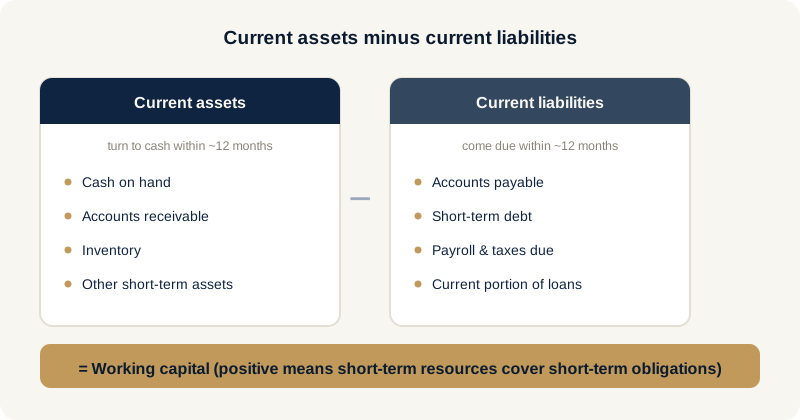
The definition is a short piece of arithmetic:
Current assets
These are things expected to become cash within about a year: cash itself, accounts receivable (money customers owe you), and inventory you plan to sell. They’re the near-term resources.
Current liabilities
These are obligations due within about a year: accounts payable (what you owe suppliers), short-term debt, payroll and taxes coming due, and the current portion of longer loans. They’re the near-term claims on those resources.
The result
Subtract the second from the first. A positive figure means the business’s short-term resources more than cover its short-term obligations. A negative figure — more due soon than available soon — is a signal to look closely at timing, even if the business is otherwise healthy. The number is a snapshot, not a verdict, and it moves constantly as money flows through the business.
Why cash-flow gaps happen
Working-capital pressure usually isn’t a sign that something is wrong — it’s a timing problem baked into how businesses operate. Money tends to leave before it arrives.
A business buys inventory or materials, does the work, bills the customer, and then waits to be paid. Meanwhile payroll, rent, and suppliers don’t wait. That interval — between spending to produce and collecting from customers — is the cash cycle, and the longer it runs, the more working capital it takes to cover.
Several ordinary situations stretch that gap:
Slow-paying customers
Invoices with 30-, 60-, or 90-day terms mean revenue you’ve earned isn’t cash you can use yet.
Seasonality
A business that earns most of its money in a few months still has to fund the quiet ones.
Growth
Counterintuitively, growing faster can strain working capital — more orders mean more upfront spending on inventory and labor before the resulting sales are collected.
This is why even a profitable business can feel cash-tight: profit is earned over time, but obligations arrive on their own schedule.
Ways businesses fund working capital
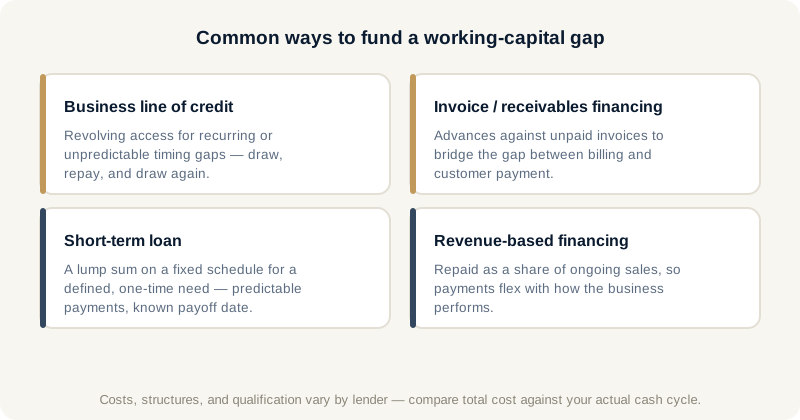
When the timing gap needs bridging, several funding structures can do the job. “Working capital financing” isn’t one product — it’s a purpose, and more than one structure serves it.
Business line of credit
A revolving option that fits recurring or unpredictable gaps: draw what you need, repay it, and the availability returns. Because it flexes with usage, it’s a natural match for ongoing working-capital timing. How a Business Line of Credit Works covers the mechanics, and Business Line of Credit vs. Term Loan weighs it against a lump-sum loan.
Short-term loan
A lump sum on a fixed schedule, suited to a defined, one-time need with a known amount — predictable payments and a clear payoff date, at the cost of less flexibility than a revolving line.
Invoice / receivables financing
Advances against unpaid invoices, aimed squarely at the slow-paying-customer problem: it brings forward cash you’ve already earned but haven’t collected.
Revenue-based financing
Capital repaid as a share of ongoing sales, so payments flex with how the business performs — heavier in strong months, lighter in slow ones.
None of these is universally cheapest or best. The honest comparison is total cost of capital against your actual cash cycle: a short bridge repaid quickly is a very different proposition from a balance carried indefinitely. Reading the full terms — total cost, payment schedule, collateral, and any personal guarantee — matters more than the label on the product.
How lenders view working capital
When a business applies for funding, working capital is one of the things a lender may look at, because it hints at whether the business can carry a new obligation without straining operations. The familiar review still applies: time in business, revenue, cash flow, existing debt, business credit history, and — very commonly for small businesses — the owner’s personal credit.
Two personal-credit notes are worth knowing before you apply. First, pre-qualification checks are often soft inquiries, while a formal application may involve a hard inquiry — asking each lender which they use is routine. Second, because the owner’s report so often enters the review, it helps to know what’s on it first. Preparing on the business side is covered in How to Prepare Your Business Before Applying for Funding in New Jersey, and the role of the score itself in What Credit Score Do You Need for Business Funding in New Jersey? Nothing here guarantees approval — qualification always depends on lender review and eligibility.
Managing working capital well
Financing is one lever, but a lot of working-capital health comes from managing the cash cycle itself — sometimes reducing the need to borrow at all.
Speed up what comes in
Invoicing promptly, making payment easy, and following up on overdue accounts all shorten the wait for cash you’ve earned.
Be deliberate about what goes out
Using (not abusing) supplier terms, avoiding overstocking inventory, and timing large outlays thoughtfully all ease the pressure on the near-term balance.
Plan for the cycle you actually have
A seasonal or long-cycle business benefits from setting aside a cushion in strong periods rather than being surprised by the lean ones. Knowing your own pattern beats chasing a generic target.
Keep an eye on the owner’s credit, too
Since personal credit often factors into business financing, treating it as part of working-capital readiness is practical. A calm way to start is simply seeing where it stands before a lender does.
Key takeaways
- Working capital = current assets − current liabilities — short-term resources against short-term obligations.
- It measures short-term breathing room, not profit or total company value.
- Gaps come from timing — money leaves before it arrives — so even profitable businesses can feel cash-tight.
- Lines of credit, short-term loans, invoice financing, and revenue-based financing can each fund the gap.
- Compare total cost of capital against your real cash cycle — costs and terms vary by lender.
- Lenders often weigh the owner’s personal credit — know what it says before you apply.