
Published July 17, 2026 · Educational information — not legal, tax, lending, or financial advice.
Quick answer
When a debt goes to collections, the original creditor has stopped trying to collect it and has either assigned it to a third-party collection agency or sold it to a debt buyer. It’s the same debt you already owed — only the company chasing it changed. The collector may contact you and may report the account to the credit bureaus as its own tradeline, anchored to the original delinquency date. Throughout, federal law gives you real protections: the right to request validation, limits on when and how you can be contacted, and the right to dispute anything inaccurate. The calm first move is almost always to confirm the debt is truly yours before paying or promising anything.
How a debt reaches collections
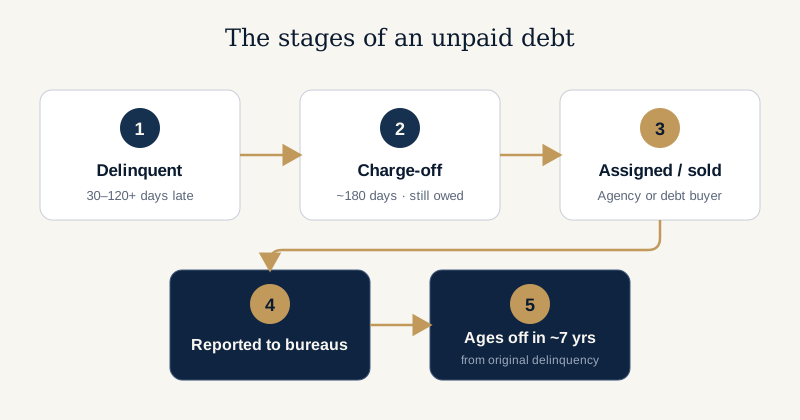
Collections don’t happen overnight. An account first moves through the late-payment tiers — 30, 60, 90, 120+ days past due — while the original creditor tries to bring it current. After roughly 180 days of non-payment, many creditors charge off the account, an accounting step that writes the balance off their books but does not erase what you owe. That distinction trips up a lot of people; it’s unpacked in what is a charge-off. Around that point the creditor typically hands the debt to a collector, and a single unpaid balance can end up producing two related entries on your report: the original account (often marked charged off) and the collection.
Assigned vs. sold to a debt buyer
There are two ways a creditor can offload a debt, and the difference matters. In an assignment, the collector works the account on the creditor’s behalf for a fee; the original creditor still owns it. In a sale, a debt buyer purchases the account outright — often for pennies on the dollar — and now owns it entirely, keeping whatever it collects. Sold debts can change hands more than once, which is why the same balance may reach you from several different companies over the years. None of that resets what you owe or how long it can be reported: each new owner inherits the original delinquency date.
What shows up on your credit report
A collector may report the account to one, two, or all three bureaus — or to none. When it does, the collection appears as a distinct tradeline. It won’t extend the reporting window, because that window is anchored to the original delinquency and doesn’t restart on sale, payment, or dispute — the full timeline is laid out in how long do collections stay on your credit report. If a collection reports a delinquency date newer than your true first missed payment — a practice called re-aging — that’s an inaccuracy worth disputing. Catching it means knowing your own dates, which is one more reason to read your reports on a rhythm rather than waiting for a notice; the mechanics are in how to read your credit report.
Your rights when a collector makes contact
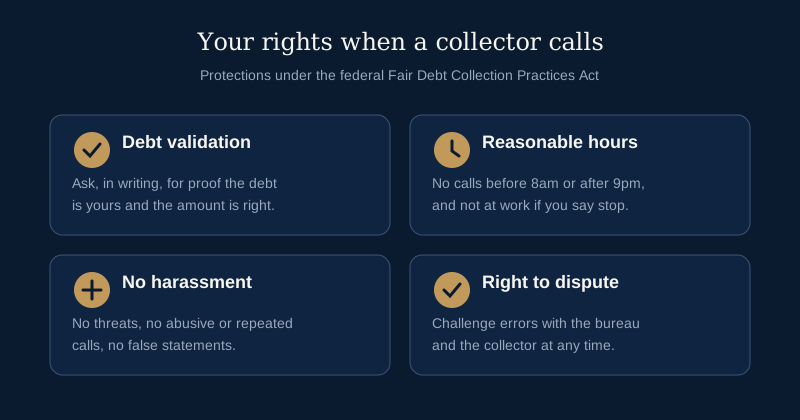
The moment a third-party collector contacts you, the federal Fair Debt Collection Practices Act applies. You have more leverage than a first phone call tends to suggest. You can request validation in writing — documentation that the debt is yours and the amount is right — and collectors face real limits on how and when they can reach you. Errors are common enough in collection files that verifying before paying is simply prudent, not adversarial.
What to do first
Resist the urge to pay or promise on the first call. A steadier sequence: pull all three of your credit reports so you can see what’s actually being reported and to whom; request validation in writing before agreeing to anything; and keep records of every letter and call. Confirm the amount, the dates, and that the account is truly yours. Only after the debt is validated does the real decision begin — whether, when, and how to pay — which is its own topic, covered in should you pay off a collection account. If the entry is inaccurate, you dispute it rather than pay it; the process is in how to dispute an error on your credit report. And if the collection is part of a broader setback, the wider path forward is in how to rebuild your credit after financial hardship.
Two real-world examples
The card that got sold. Priya stopped paying a credit card in early 2023 during a job gap. It charged off that summer and went to a collection agency; a year later a debt buyer she’d never heard of sent a letter for the same balance. Rattled, she almost paid on the spot — then requested validation instead. The paperwork confirmed the debt was hers but showed a small overstatement in fees, which she got corrected before deciding how to resolve it. The delinquency date on her report stayed anchored to early 2023 the entire time.
The account that wasn’t his. André got a collection call for a utility balance in a city he’d never lived in. Rather than argue by phone, he asked for validation in writing. The collector couldn’t produce documentation tying the account to him — a likely case of mixed files or identity error — and he disputed the entry with the bureau, which removed it. Paying would have been the wrong move; verifying was the right one.
Key takeaways
- Going to collections means the debt was assigned or sold — it’s the same balance, with a new company collecting.
- A collection may be reported as its own tradeline, anchored to the original delinquency — it doesn’t extend the clock.
- Federal law limits when and how collectors contact you, and bars harassment, threats, and false statements.
- Request validation in writing before paying — collection files often contain errors worth catching first.
- Pull all three reports, keep records, and dispute anything inaccurate rather than paying it.