
Published July 5, 2026 · Educational information — not legal, tax, lending, or financial advice.
Quick answer
A security freeze blocks lenders from pulling your credit file for new applications — which means someone with your stolen information generally can’t open credit in your name, because the lender can’t see the file to approve it. It’s free at all three bureaus by federal law, has zero effect on your score, and leaves your existing cards, loans, and self-checks working normally. To place one: contact Equifax, Experian, and TransUnion separately (online is fastest), verify your identity, and save the PINs or credentials. When you need new credit yourself, you thaw — temporarily and, by law, generally within an hour for online requests. Freeze what a thief would use; keep the key.
What a freeze does (and doesn’t)
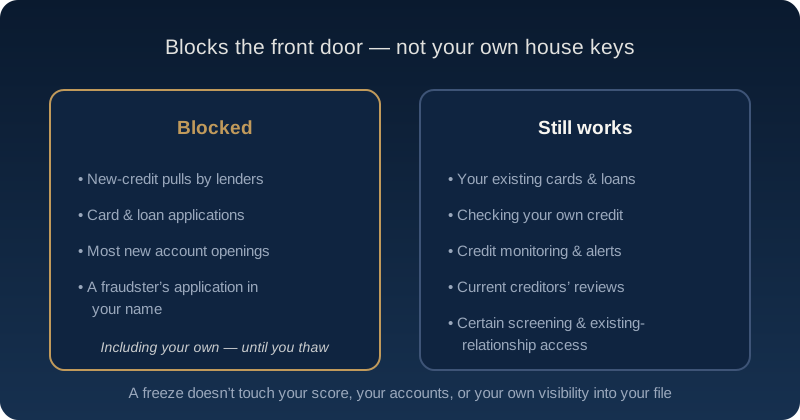
The logic is simple: most identity theft that involves credit runs through a new application — a card, a loan, financing — and no mainstream lender approves one without pulling the applicant’s file. A freeze closes that door: bureaus won’t release your file for new-credit purposes while it’s in place, so the application dies at the credit check, whether the applicant is a fraudster or (until you thaw) you. What a freeze doesn’t touch is everything else: your existing accounts work normally, current creditors can still review your file, you can still check your own credit and run monitoring, and your score is completely unaffected — frozen files keep reporting and building history exactly as before. It blocks the front door for strangers; your own keys still work.
Placing the freeze: step by step
The bureaus maintain separate files, so a freeze must be placed at each one separately — freezing one leaves the other two open, and a lender can pull from any of them (the separate-files reality behind a lot of credit quirks, as covered in why your three credit scores are different). The process at each: go to the bureau’s freeze page (search “[bureau name] security freeze” and confirm you’re on the bureau’s own site), create an account or sign in, verify your identity, and request the freeze. Online and phone freezes generally take effect within one business day by law; mail takes longer. Each bureau issues a PIN or ties the freeze to your account credentials — store these somewhere safe, since they’re what you’ll use to thaw. Total time for all three: typically under half an hour, once, for protection that persists until you say otherwise.
Thawing when you need credit
A freeze isn’t a vow of credit celibacy — it’s a lock you open on demand. When you’re applying for something, request a thaw: permanent if you prefer, but the temporary window is the better tool — you pick the dates, the file opens for that span, and the freeze re-engages automatically after. By federal law, online and phone thaw requests must generally take effect within one hour, so this isn’t a multi-day planning problem. Two efficiencies: ask the lender which bureau they pull from and thaw only that one; and if you’re rate shopping a mortgage or auto loan across several lenders, set one window covering the shopping period — which pairs naturally with keeping those applications compact anyway, per the inquiry-grouping mechanics in how long do hard inquiries stay on your credit report.
Freeze vs. lock vs. fraud alert
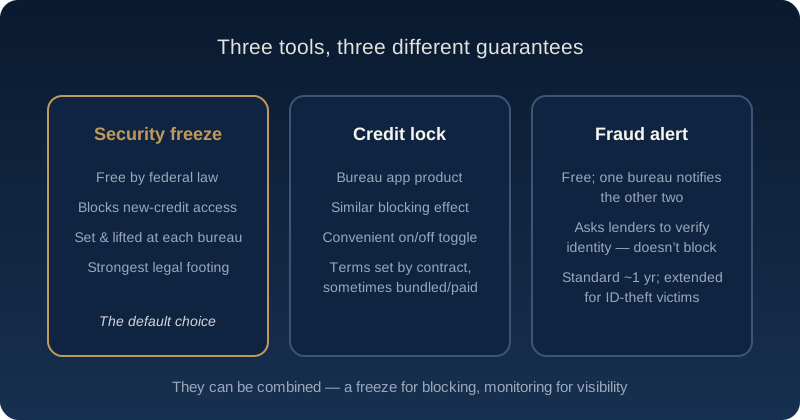
Three tools get conflated here. The security freeze is the one with federal law behind it: free, standardized, enforceable. A credit lock is a bureau product — usually an app toggle — with a similar blocking effect but terms set by contract rather than statute, sometimes bundled into paid subscriptions; convenient, but the freeze is the stronger default. A fraud alert doesn’t block anything: it asks lenders to take extra identity-verification steps before extending credit, lasts about a year in standard form (longer for documented identity-theft victims), and has one convenience the freeze lacks — place it at one bureau and that bureau notifies the other two. The tools stack: a freeze for blocking, monitoring for visibility into what’s happening on the file anyway, and a fraud alert layered on after a known incident.
Who should freeze — and when
The honest answer is that a freeze suits most people most of the time, because most people apply for new credit rarely — the door can stay locked for months or years at no cost, opened for an hour when needed. It’s especially worth prioritizing after a data breach notice involving your Social Security number, after any fraud signal (an unfamiliar hard inquiry, mail about accounts you didn’t open), and during life phases with no borrowing on the horizon. The main friction cases: people mid–mortgage-shopping or expecting frequent applications, and situations where non-lenders (some utilities, landlords, employers using credit checks) need file access — thawing handles all of these, it’s just a step to remember. A freeze also pairs with, rather than replaces, watching the file: it blocks new accounts but doesn’t alert you to anything, which is what a review rhythm and monitoring are for — the cadence is in how often should you check your credit report.
Freezing a child’s credit
Child identity theft is quietly common precisely because nobody’s watching: a minor’s clean Social Security number can be used to build a fraudulent file that goes unnoticed until the child applies for their first real credit years later. Parents and legal guardians can request a freeze for a minor at each bureau — generally by mail, with documentation proving both the child’s identity and your authority (birth certificate, your ID; each bureau lists its requirements). If no file exists, the bureau creates one and freezes it, which is the point: the number becomes unusable for new credit until the freeze is lifted, typically when the young adult starts their own credit life. It’s a paperwork afternoon that closes one of the longest-running blind spots in family financial security.
Two real-world examples
The breach letter. Noor gets a notice that a company holding her SSN was breached. That week she freezes all three bureaus online — about twenty-five minutes total — and stores the credentials in her password manager. Eight months later, her monitoring flags nothing unusual and life is unchanged: cards work, autopay runs, her score moves for the ordinary reasons. When she eventually finances a car, she asks the dealer which bureau their lenders pull, thaws that one for a five-day window from her phone in the showroom, and the approval proceeds. The freeze cost her one hour of thaw planning in eight months; the breach cost her nothing.
The application that bounced. Someone with Marcus’s stolen information applies for a store card in his name. The issuer’s system requests his file, hits the freeze, and declines the application on the spot — no account, no balance, no collection, no seven-year cleanup. Marcus only learns it happened when a mailed adverse-action notice arrives referencing an application he never made. He keeps the freeze on, adds a fraud alert, and reads all three reports for anything else — and finds his file exactly as he left it. The attack happened; the story it usually starts never did.
Key takeaways
- A freeze blocks new-credit access to your file — free at all three bureaus by federal law.
- Zero score impact; existing accounts, self-checks, and monitoring all keep working.
- Freeze all three bureaus separately, and store the PINs/credentials safely — they’re your key.
- Thaws are fast — generally within an hour online — and temporary windows re-freeze automatically.
- Prefer the freeze over lock products, layer a fraud alert after incidents, and consider freezing your kids’ files too.