
Published July 6, 2026 · Educational information — not legal, tax, lending, or financial advice.
Quick answer
Identity theft rarely announces itself — it leaks out through small anomalies. The big ones on your credit report: accounts you never opened, hard inquiries you don’t recognize, and personal information that isn’t yours. Off the report: bills for unfamiliar accounts, collector calls about debts you never incurred, expected mail that stops arriving, charges you didn’t make, a surprise denial, or a tax return rejected as “already filed.” The pattern is simple: anything about your financial identity that you can’t explain deserves an explanation. Spot something? Confirm on all three reports, contain with a freeze and fraud alert, report at IdentityTheft.gov, and dispute — the earlier the catch, the smaller the cleanup, which is exactly the head start credit alerts are built to give you.
Why early detection matters
Identity theft is a compounding problem: a fraudulent account left alone accumulates balance, then late payments, then collection activity — each stage adding cleanup work and credit damage that takes longer to unwind. Caught in week one, the story is often a few phone calls, a dispute, and a freeze; caught in year two, it can be a file full of derogatory items, each needing separate documentation to remove. The thief’s best friend is the gap between the fraud happening and you noticing, which is why the whole discipline of spotting identity theft reduces to shrinking that gap — knowing what the signs look like, and having a rhythm that surfaces them.
Signs on your credit report
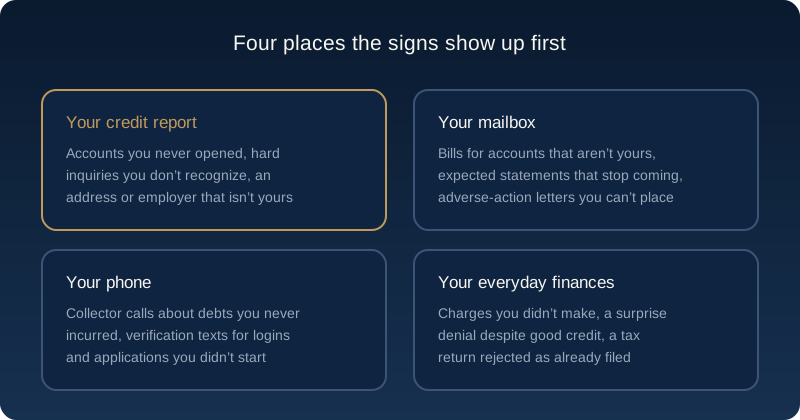
The report is where new-account fraud surfaces first, and three sections do most of the telling. Accounts: any tradeline you never opened — a card, a loan, a financing account — is the loudest possible signal, especially one already carrying a balance. Inquiries: a hard inquiry you can’t match to anything you applied for means someone submitted an application in your name — the verification-and-dispute path is in how to remove unauthorized hard inquiries, and the mechanics of who sees what are in soft inquiry vs. hard inquiry. Personal information: an address you never lived at, an employer you never had, or a name variant you don’t use can mean someone else’s applications are feeding data into your file. And because the bureaus keep separate files, fraud can appear on one report and not the others — the same separate-files reality behind why your three credit scores are different — so a real check means all three.
Signs off the report
Not all identity theft touches your credit file, so the watch list extends into daily life. Mail: bills or statements for accounts that aren’t yours, adverse-action letters referencing applications you never made, or the reverse — expected statements that stop arriving, which can mean an address change filed in your name. Phone: debt collectors calling about debts you never incurred, or verification codes arriving for logins and applications you didn’t start. Money: charges you didn’t make on existing accounts, a credit denial that doesn’t square with your history, missing direct deposits. Government and medical: a tax return rejected because one was “already filed,” benefits statements for claims you never made, or explanation-of-benefits notices for care you never received. None of these appears on a credit report; all of them are the same disease in different clothing.
Gray areas: suspicious vs. explainable
Most anomalies have boring explanations, and knowing the common ones saves false alarms. Unfamiliar inquiries often trace to a lender’s parent-company name — the store card that shows up as the issuing bank. An account you “don’t recognize” may be an old one reported under a servicer’s name after a transfer. A small unfamiliar charge might be a merchant’s billing name differing from the storefront. The test isn’t unfamiliar, it’s unexplainable after investigation: match dates to your own activity, search the merchant or lender name, check whether a household member applied for something. What earns escalation is anything that survives that check — and clusters: one oddity is a question, two or three around the same time are a pattern.
Spotted something? The first four moves
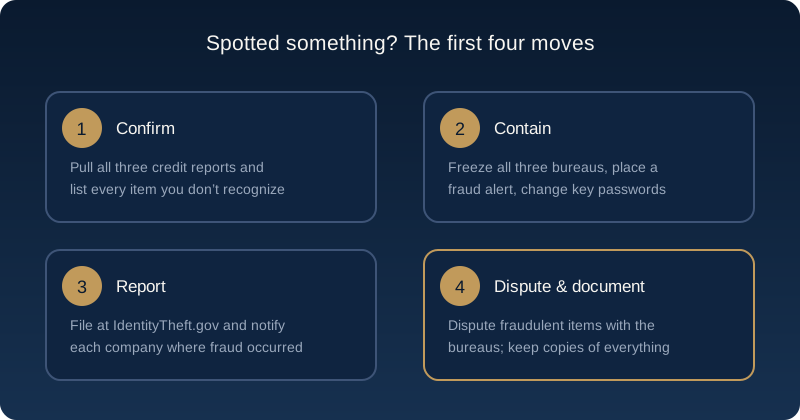
Confirm: pull all three credit reports and inventory everything you can’t explain — accounts, inquiries, addresses — so you’re working from the full picture, not the one report that happened to show it. Contain: freeze your credit at all three bureaus so no further accounts can be opened (the full process is in how to freeze your credit), place a fraud alert, and change passwords on financial logins; the differences between those two tools — and why confirmed victims typically use both — are covered in fraud alert vs. credit freeze. Report: file at IdentityTheft.gov, which generates an identity theft report and a recovery plan, and notify the fraud department of each company where an account was opened or misused. Dispute and document: dispute the fraudulent items with each bureau reporting them, and keep dated copies of every report, letter, and confirmation number — the paper trail is what makes removals stick.
Building a watching habit
Spotting depends on looking, and the sustainable version is a rhythm rather than an annual audit: a brief monthly pass through card and bank activity, a full credit report read every few months rotating through the bureaus, and an immediate all-three check after any trigger — a breach notice, a strange call, an unexplained denial. The cadence and the free-report mechanics are laid out in how often should you check your credit report. Monitoring automates the space between reads: it won’t stop fraud, but it compresses the detection gap from months to days by flagging new accounts, inquiries, and personal-information changes as they land — which, per everything above, is most of the battle.
Two real-world examples
The collector call. Tanya gets a call about a past-due electronics financing account she’s never heard of. Instead of arguing or paying, she asks for the debt details in writing, then pulls all three reports the same day. One bureau shows the account — opened eight months earlier at an address two states away — plus two inquiries she can’t place. She freezes all three bureaus, places a fraud alert, files at IdentityTheft.gov, disputes the account and inquiries with documentation, and sends the collector the identity theft report. The account comes off; the freeze stays on. Total elapsed damage: eight months of someone else’s spending, zero of it ultimately hers — but a week one catch would have been three phone calls instead of thirty.
The quiet address change. Rob notices his card statement didn’t arrive two months running — mildly odd, since everything else comes fine. He logs in and finds the mailing address was changed to one he doesn’t recognize, with a replacement card ordered. Because he treated missing mail as a signal instead of a postal hiccup, the issuer kills the card before it’s used, and his three reports come back clean — the fraud died at the setup stage. He freezes his files anyway and sets a monitoring alert; the next attempt, if it comes, will hit a locked door.
Key takeaways
- On the report, three sections tell the story: unfamiliar accounts, unrecognized hard inquiries, and personal information that isn’t yours.
- Off the report, watch mail, collector calls, unfamiliar charges, denials, and tax or benefits anomalies — plenty of fraud never touches the credit file.
- The standard is unexplainable, not unfamiliar — investigate first, escalate what survives the check.
- The response order: confirm on all three reports, contain with a freeze and fraud alert, report at IdentityTheft.gov, dispute with documentation.
- Early detection is the whole game — a review rhythm plus monitoring shrinks the gap the damage grows in.